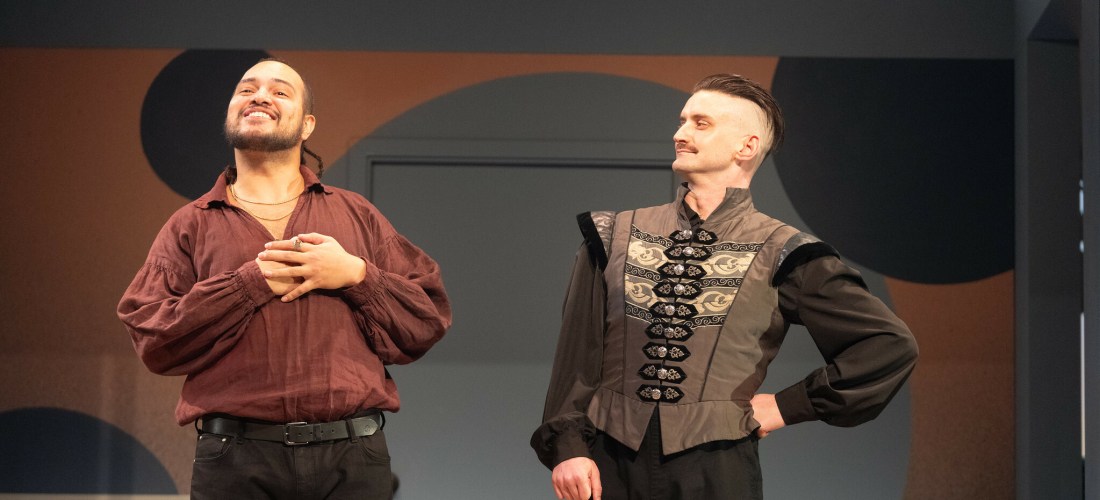
Picture it: Opening night of a Shakespeare production.
You’ve just been told you’re going on as one of the leading roles.
And you don’t know the lines.
That’s what happened at Portland Center Stage’s official opening of “Twelfth Night” on Nov. 29. Right before the curtain rose, the director came out to introduce the production and announce the role of Orsino would be played not by the PCS star performer cast in the role but by the assistant director, who’d received the assignment just a few hours beforehand. She noted he’d carry a script and some of the choreography would be altered, but otherwise the show would go on. She didn’t share the reason for the switch.
I don’t think I was the only audience member squirming in their seat with secondhand anxiety at this real-life mirroring of the classic nightmare scenario: walking onto a stage in front of a packed crowd not knowing the words. In an over-two-hour Shakespeare production, no less. And this was real life. With the central dramatic question shifting to, “Will they pull this off?“, the lights dimmed and the show began.
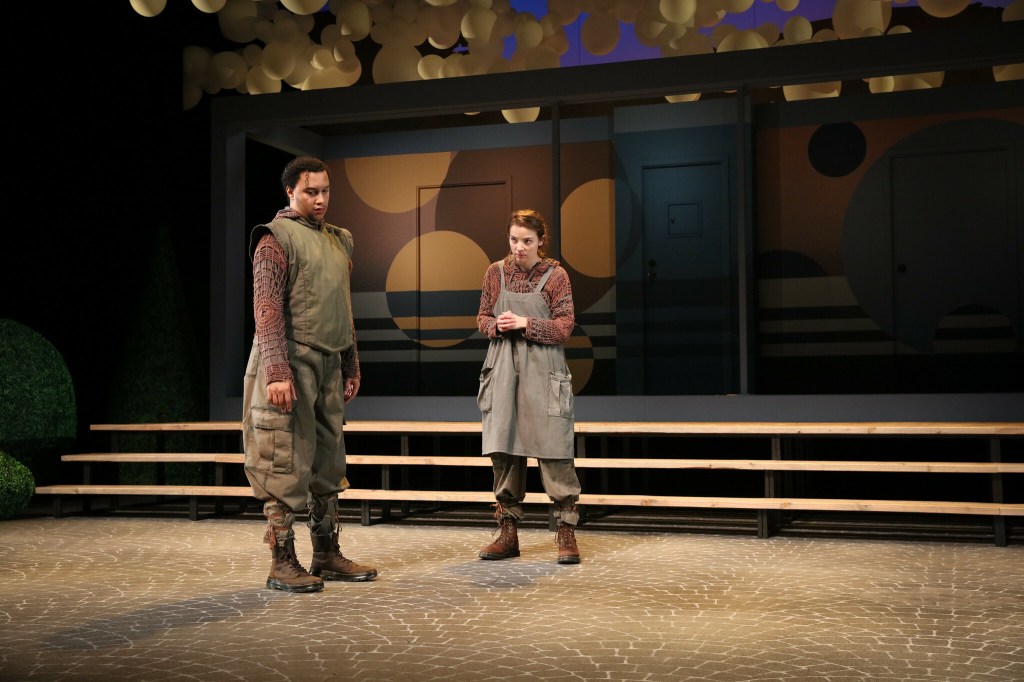
The impromptu-understudy, Dakotah Brown, did a stellar job. He acted through each scene with a professional grace, glancing down at the script but keeping up with his castmates as he embodied the lovesick duke who conscripts a woman-disguised-as-her-brother to woo a disinterested countess (surrounded by a no-nonsense steward and all-nonsense trio of drinking buddies also warring for her approval.)
The full cast included many familiar faces (“Midsummer Nights Dream” alumni Andrés Alcalá, Nicole Marie Green, Tyler Andrew Jones, Treasure Lunan, and Andy Perkins dazzled and delighted), a few folks new to me but not the PCS stage (Dana Green and Darius Pierce, both bringing heart and depth to their characters) and one PCS debut who slotted into the mix effortlessly and will hopefully be back for future shows (Lea Zawada, a sharp, expressive and hilarious Viola/Cesario). The Bard’s tale was in capable hands, and they deftly wove together the story of adoration, miscommunication, petty revenge and happy endings with collaborative expertise.
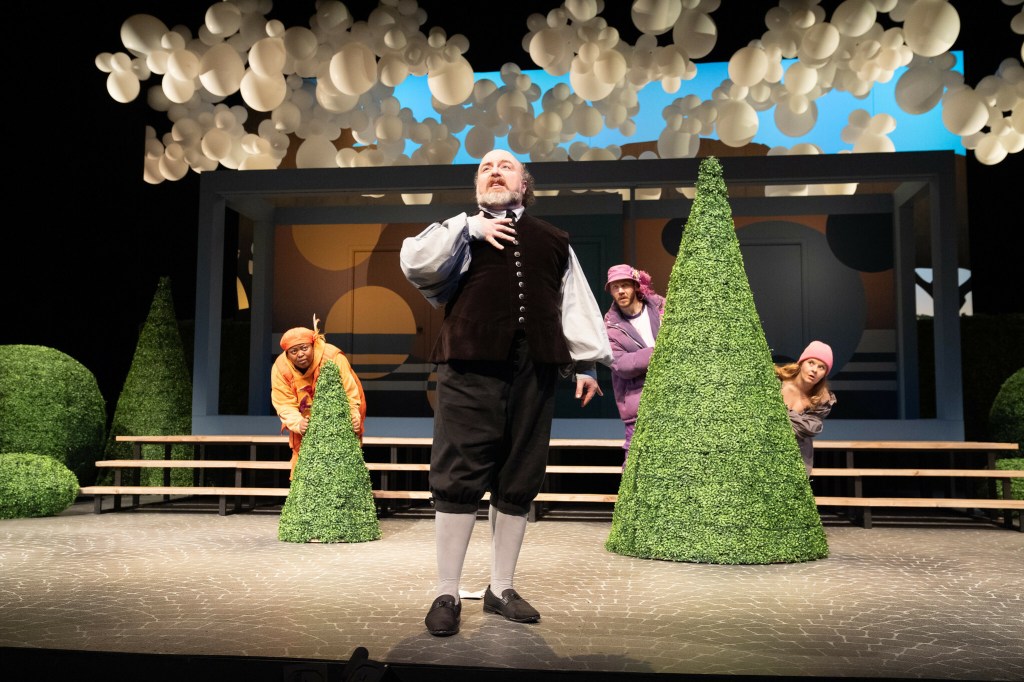
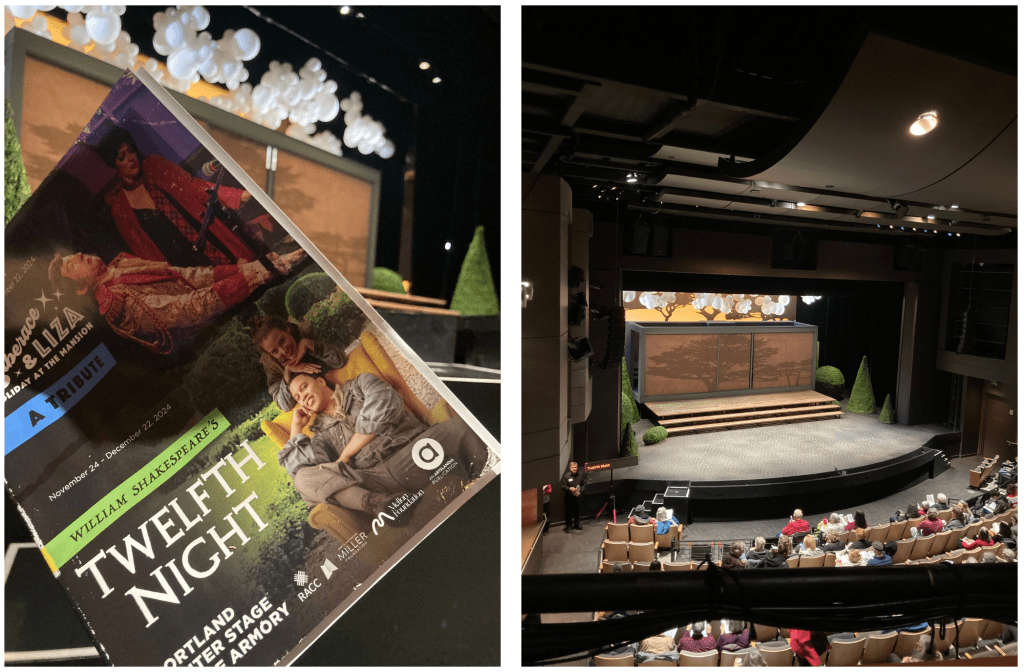
This production wasn’t exactly historical nor modern — it fell somewhere in the middle, accessible to contemporary audiences but not a full “She’s the Man” cell-phone-wielding remake. Sir Toby and Sir Andrew cracked open beers from a cooler, and in lieu of a black veil, Olivia obfuscated herself with sunglasses. The outfits were giving “Shakespeare but make it Portland,” with Viola and her twin in doc martens and Antonio sporting a mohawk. Costume designer Alison Haryer deserves a shout-out for putting the aforementioned beer-chugging sirs in matching neon tracksuits, inviting the audience to take them with all due respect (which is to say, none at all.) Peter Ksander’s sets were sleek and gorgeous, mostly free from props — minus the evergreen trees that enabled the best physical comedy bit in the show as the trio ducked and rolled around to evade detection.
I’d also be remiss not to mention one of the quietest but most impactful pieces of this production, the work of choreographer Muffie Delgado Connelly: short interludes in between scenes where Viola and Antonio, the isolated twins, mirror each other’s subconscious body language, a small wave of the hand or rub of the neck. It’s a welcome breath in between the dialogue-packed group scenes. More importantly, it connects the two storylines through their sibling bond and helps explain how no one can tell them apart.
So, to answer the question from the beginning, did they pull it off? Absolutely. I devoured it, loved it, needed to see it again. As soon as I got home from opening night, I bought another ticket. I could have booked the very last performance, a fitting bookend against the first, but the third-from-last show, the Saturday matinee, was listed as an open-captioned production. As a hard-of-hearing person who uses subtitles for literally everything, I wanted to see how it would change my experience to be able to read Shakespeare’s text in real time.
Thus, after a tumultuous three weeks of real-life drama (though no sword fights or realizations the twin I’d assumed was lost at sea had accidentally married the person I was trying to friendzone… so I guess not THAT dramatic), I returned to the theater the afternoon of Dec. 21. I sat in the balcony, which gave me a birds-eye view of the stage but was still close enough to catch all their expressions.
This time, Setareki Wainiqolo (who played an unforgettable PCS Dracula a year ago) stepped into Orsino’s shoes with gusto, announcing “If music be the food of love, play on!” with such charisma the audience understood why Viola fell hard.
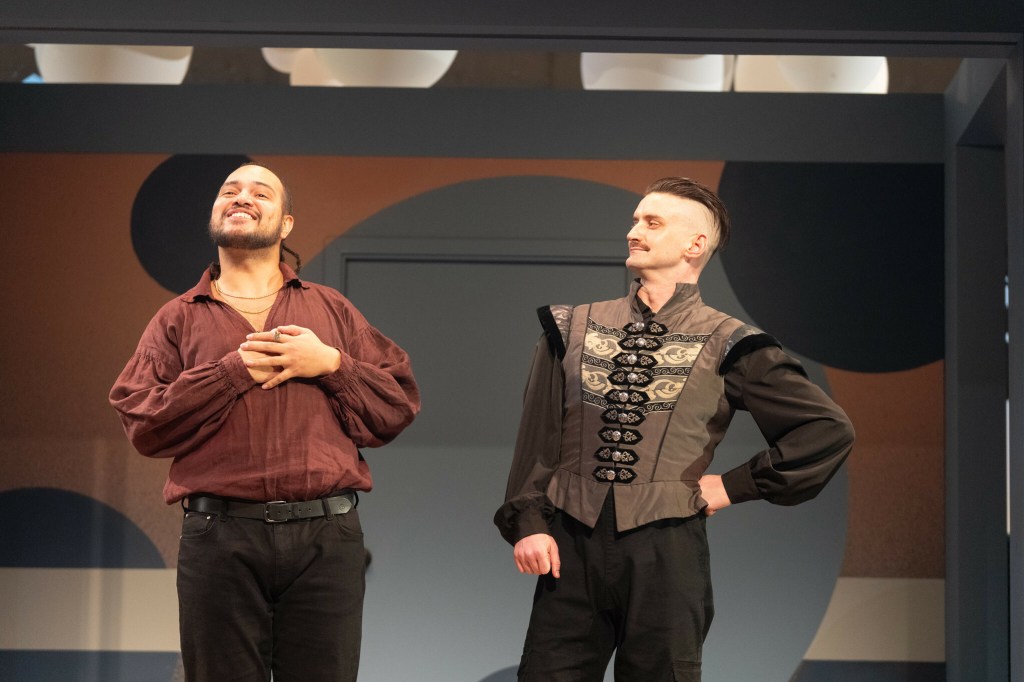
Without the uncertainty of a script-wielding stand-in, having seen it once before, and with the aid of a captioning display, it was easier for me to immerse myself in the story this time and just enjoy the antics. The only “new” pieces were two dance numbers that now featured Orsino — I now understood what the director, Marissa Wolf, meant when she mentioned alterations, because he’d been missing from those numbers in the first show. One of the enhanced-dances was a trio number with Orsino trying to dance with Olivia who’s trying to dance with Viola/Cesario who’s trying to dance with Orsino, all of them circling each other with barely-concealed desire, which perfectly encapsulated their whole dynamic and was just fun.
That’s what I love about PCS productions. They take nutrient-dense vegetables like Shakespeare and turn them into something you can consume, enjoy and feel satiated afterwards. Like a platter of sweet potato fries paired with a perfect aioli. (Is that a relatable simile, or am I just hungry?) As I return to the Armory time and time again to see familiar faces take the stage, I always know I’m in for a treat.
So after the holidays, I’ll be back to catch the next show at least once. (Probably twice.)

 Skylar Mason