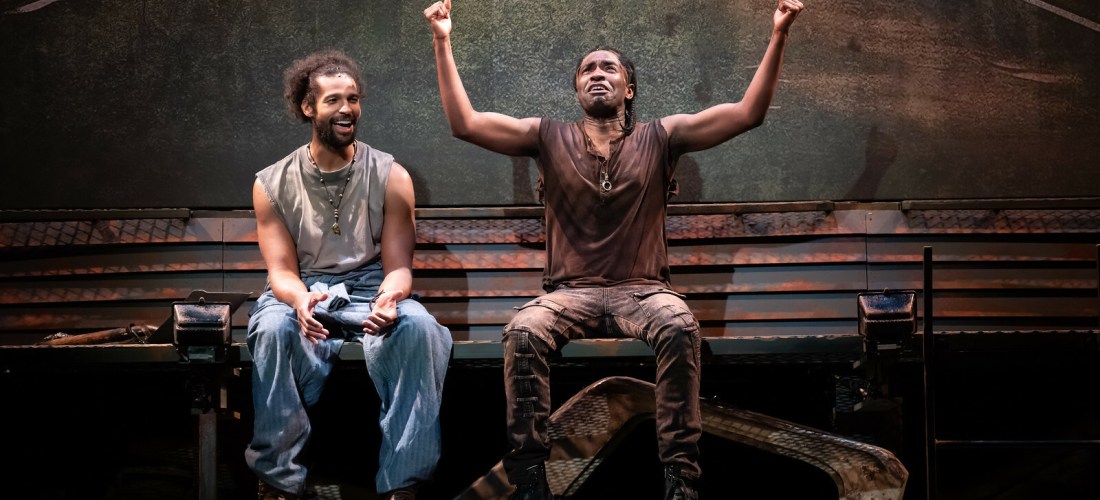
Two actors sit on a platform, one animated with arms in the sky.

The Brothers Size, Part 1

Retrospectives, Reviews, Theater

The best art can both 1) show you fictionalized things you’ve never seen before, and 2) make you feel like you’re watching a piece of yourself on the stage/page/screen.

Walking out of the opening night of Portland Center Stage’s “The Brothers Size,” I felt both. The show was one of the most electrifying, heartrending, original, and moving things I have ever experienced.

I’m still reeling, and I don’t think I can adequately convey everything I just experienced in words.

But I’m a writer, so I’m going to try.

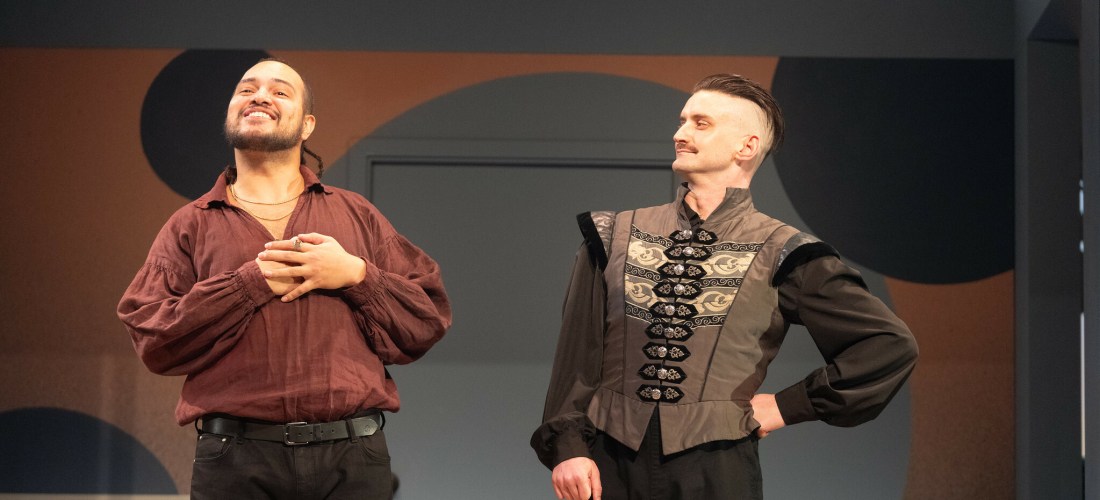
The story itself is straightforward: it’s about two brothers. Ogun Size (played by Austin Michael Young in this PCS production) and Oshoosi Size (Charles Grant) are living together. More accurately, Oshoosi is crashing at his older brother’s house while he tries to get his life back on track a few months after getting out of prison. Underneath the brothers’ classic sibling bickering is deep-seated hurt from the two years they spent separated by bars. Complicating, well, everything, is Elegba (Gerrin Delane Mitchell), whose time in prison overlapped with Oshoosi’s and is now there for him as someone who can relate to his lived experience in a way his brother can’t. The triangle tension between the three is so simple and yet drives the entire show, plowing into some of life’s most difficult questions:

  • What does it mean to love someone — does it mean pushing them to be their best or giving them space to find their own path?
  • Do you put your trust in the people who’ve known you the longest or the people who’ve been through the worst with you?
  • How do we define what it means to be free when we’re all confined within systems and limitations outside our control?

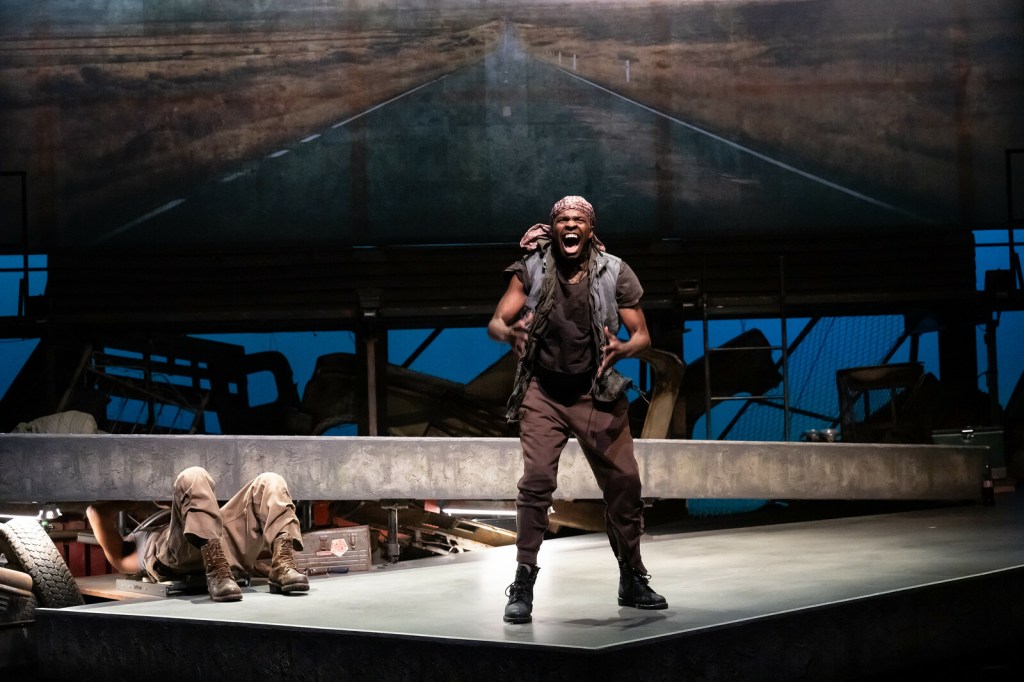
From everything I’ve said so far, it probably sounds like a grim, gritty play — but “The Brothers Size” doesn’t fit in that box. It was also funny, and visual, and musical, and experimental. For example, throughout the show, the characters break the fourth wall to announce stage directions before they perform them, so you hear it verbalized before you see it happen. Dream sequences of Yoruba cosmology featured neon-lit garb surpassing Coachella standards (credit to Dominique Fawn Hill, costume designer), which brought a fantastical edge that managed to fit naturally within the story. The stage was layered with levels of platforms that built dimension and real distance for the characters to scale (credit to Brittany Vasta, scenic designer.)

Featuring Austin Michael Young and Charles Grant. Photos by Jingzi Zhao. Courtesy of Portland Center Stage.

All of this added up to a show more than the sum of its parts. I often find myself writing something along the lines of “in less capable hands, this could have been a huge miss,” when I’m talking about shows doing something risky. That is true for this show on eighteen gazillion levels. There were so many pieces to this, and any one of them, had it been just a little off-kilter, could have ruined the whole thing. Instead, like a sixteen-step recipe in the hands of a Michelin-starred chef, it was a masterpiece.

And that simile isn’t even really a simile, because writer Tarell Alvin McCraney is the screen-and-stagewriting equivalent of a Michelin-starred chef, when you consider he wrote “Moonlight.” That’s right, HE WROTE “MOONLIGHT”!!!!

And just as “Moonlight” was semi-autobiographical, “The Brothers Size” pulls from McCraney’s lived experience: his brother went to jail and, in McCraney’s words, came out “completely changed, and there was no way to help him. I didn’t have the tools, the resources, the access – and still don’t – to make his life better.”

That explains why the heart of this story runs so deep, and why it works so well. It’s fiction, and it’s not. And knowing that Ogun’s anguish, his complete helplessness watching his brother suffer, is based on McCraney’s lived experience makes it that much more powerful.

Having had a stellar rewatching experience at PCS’s “Twelfth Night,” I just bought a ticket to see “The Brothers Size” again. I had to. And this time it’s a perfect bookend: the opening night and the final performance. Only instead of grouping both shows in one post, I’m going to share these reflections now and then come back with my thoughts after seeing it the second time.

I’m curious how it will be different: for me, when I know what to expect; and for the actors, who will have performed it 25 times between now and then. While they’re doing all those matinee and evening performances, I’ll go to the ballet, get a tattoo, visit another state, take my cat in for dental surgery, see Chris Grace as Scarlett Johansson, and host a dinner party. Then we’ll meet back at the stage for one more evening together.

See you in 23 days!

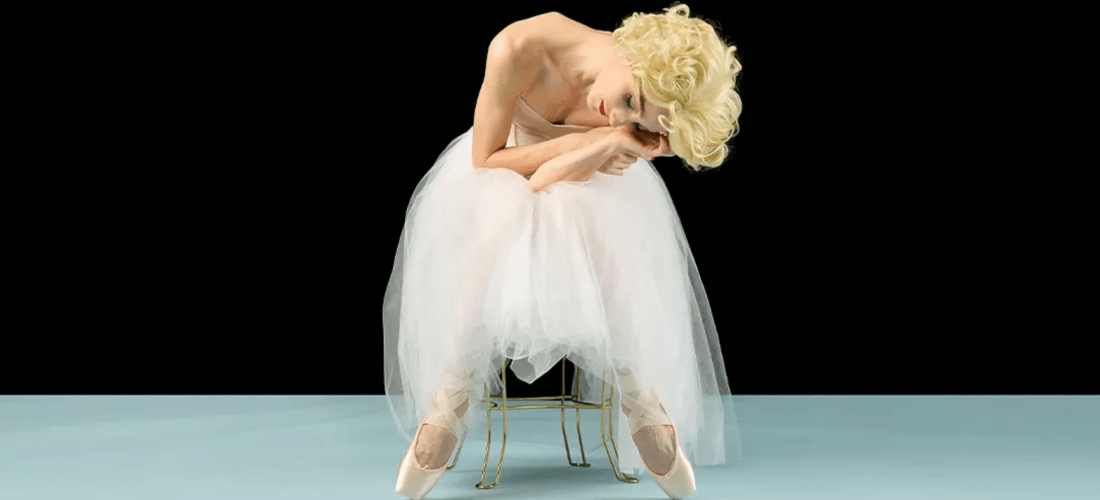
Marilyn Monroe™; Rights of Publicity and Persona Rights are used with permission of The Estate of Marilyn Monroe LLC. Carly Wheaton | Photo by Christopher Peddecord

You’ve never seen ballet like this

Reviews

Marilyn Monroe parts a sea of tuxedoed men and saunters down the stairs in a fuchsia gown, hips swaying as she twists wrists bejeweled with glittering diamonds over elbow-length gloves. She smiles at the audience, red lips bright in the spotlight. Then she steps en pointe and dances across the stage to a swelling orchestral arrangement.

Turning the story of Marilyn Monroe’s life into a full-length classical ballet is an idea that never in a million years would have crossed my mind. But luckily it crossed the minds of Oregon Ballet Theatre’s artistic director, Dani Rowe, and costume designer, Emma Kingsbury. According to the program notes, the idea sparked after they watched Kim Kardashian wear Monroe’s dress to the Met Gala and then viewed prints of Andy Warhol’s series depicting Monroe in both color and black and white, perfect and imperfect.

“This contrast spoke to the duality of her persona — the radiant star and the woman struggling with inner demons,” Rowe wrote.

Unlike OBT’s recent productions of “Giselle,” “The Nutcracker,” and “Swan Lake,” (all incredible, by the way) this show was created from scratch by Rowe and the OBT team. I saw it a week into the world premiere production – one of the last performances here in Portland before the show moves on to Oklahoma and Ohio to be performed by their local dancers.

As an original production, there are a million ways the team could have chosen to produce it, merge the story and the form, and make a statement. Many of those approaches could easily have fallen flat. Fortunately, the OBT team pulled it off, creating a brilliant amalgamation of two great things made better through the act of combining them. A chocolate-covered potato chip, if you will.

Narratively, the show tells Monroe’s story through her relationships with the people closest to her: her troubled mother, a series of foster parents, a first love, acting school classmates, second and third loves, a psychoanalyst, and a seemingly neverending stream of costars and production teams. This approach allows the audience to see Monroe not as a static image but as a growing person with as many dimensions as her signature diamonds.

Not exactly a character but a force nonetheless are the paparazzi, portrayed by a series of figures masked and wearing dark uniforms, who lift her up and carry her away and take flash photos and enable and block and comfort and frustrate her in equal measure. Their presence on the stage helps visualize what must have been running through her mind with every step, every word, every smile: people were watching her. Over the course of the show the paparazzi became more aggressive, requiring her to choose whether to fight or let them sweep her off her feet, away from those who know her as a person.

As Rowe said in the quote above, the show focuses on exploring the dichotomy of this dazzling celebrity figure and the real person underneath. On the surface it’s a rags-to-riches story, but digging deeper, we see that the forces that brought her out of poverty and into the spotlight also prevented her from living the life she wanted and connecting with the people she loved. One of the scenes that will stick with me is Marilyn swinging on a (real) rope swing, wistfully watching four women dote on their baby carriages. She wants what they have. They idolize her. Both sides yearn in a “grass is greener” complex. For my part, I sat there watching from the box seat I purchased with my own money, grateful those are no longer the only two life paths afforded to people born female.

I loved, loved, loved seeing the familiar company of OBT dancers in new costumes and environments. They traded the beige and white tunics and corsets of most classical productions for a 1940’s/1950’s wardrobe of neon A-line skirts and business suits — clothing that could make you forget you were watching a ballet until the dancers started dancing. The standout costumes were, as to be expected, Monroe’s: the aforementioned bright pink gown, the white grate-fluttering dress, the President’s Birthday skintight skin-toned number. As much as the show was about de-idolizing Monroe, it was impossible not to get a little swept up in the same allure that captured the world. On the Newmark Theatre stage, she shone.

Carly Wheaton | Photo by Christopher Peddecord, shared by Oregon Ballet Theatre

The cast in this performance was full of my favorite dancers: credit is due to Jessica Lind (Monroe), Charlotte Zogas (child Norma Jeane), Eva Burton (mother), Hannah Davis (young Norma Jeane), Benjamin Simoens (James & psychoanalyst), John-Paul Simoens (Joe & father), Brian Simcoe (Arthur), and Bailey Shaw (Kennedy), as well as the entire ensemble. As with every OBT performance, I was amazed at their technical skill and amazed at how they made me feel the full range of human emotion through wordless movement.

I’ll end with the ending: Monroe, dying a relatively un-dramatized death, a poignant flashback of her youth and dancers from each era of her life, and then giant, sheer tapestries of Warhol’s depictions fluttering down and filling the stage as real recordings of Monroe’s voice played.

After two hours of no voices — just Shannon Rugani’s captivating prerecorded score — Monroe’s voice caught me by surprise and served as a visceral reminder that this was a real life, cut short far too soon. Tears streamed down my cheeks as the curtains fell.

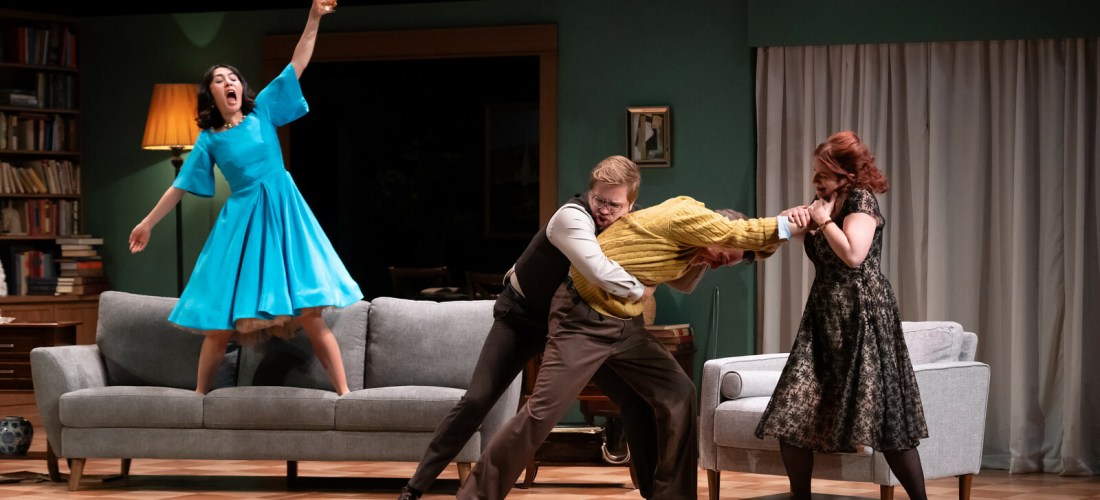
Photo of four actors: three engaged in a struggle, one standing on a couch hoisting a drink and yelling

Who’s Afraid of Virginia Woolf? (You Should Be)

Reviews

A woman waves around a nearly-empty glass of gin, cozying up to the man on the couch next to her and complaining about all the ways her husband doesn’t measure up. Behind her, the husband in question stalks forward with a gun, aiming it at her head. She turns around and a houseguest screams just as he pulls the trigger — and an umbrella shoots out, spreading harmlessly across the space between them. The party gag elicits nervous laughter and tall pours of hard liquor.

“Who’s Afraid of Virginia Woolf?” spends over three hours frolicking in this sandbox of domestic dark absurdity. The 1962 play by Edward Albee follows two couples on a highwire strung taut over the course of one night as they fight over power, desire, and truth. The gun may have proven harmless, but the couples’ words are locked, loaded, and aimed to kill, demonstrating that those who know us best have the greatest power to hurt us.

Albee’s script calls for a lot of monologuing and sitting. It was also, I repeat, over three hours long. A lesser production could have stumbled at the road blocks, leaving the audience bouncing their legs waiting for it to end. But Portland Center Stage’s expert cast and crew accepted the challenge and delivered an electric performance that made the evening fly by.

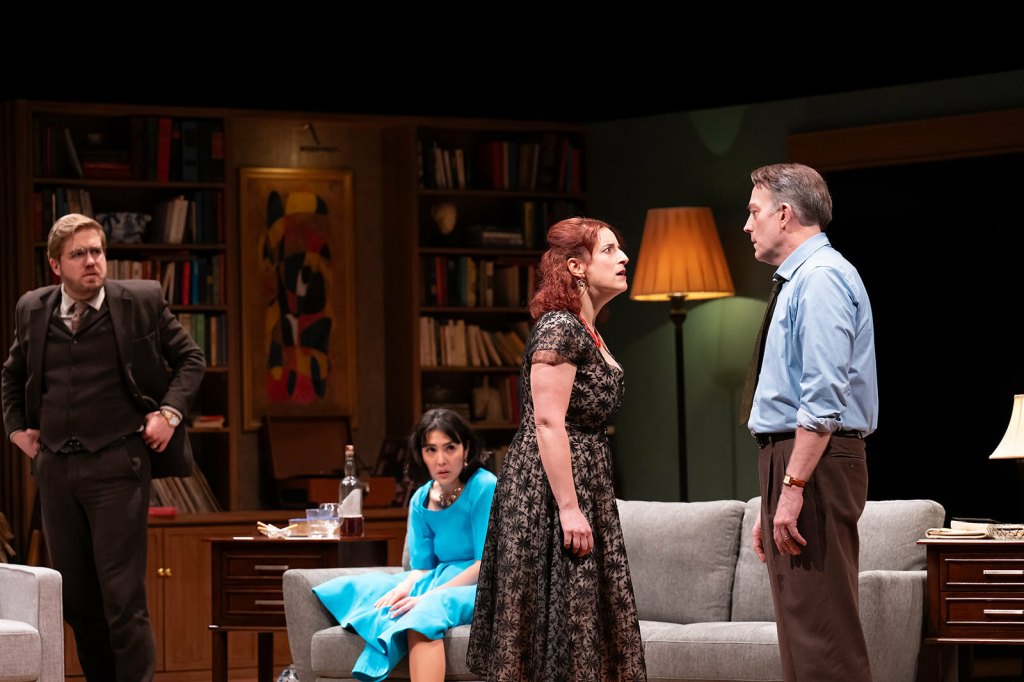
Martha (played by Lauren Bloom Hanover) and George (Leif Norby) met each other on the verbal battlefield with equal and opposing force, taking turns playing victim and aggressor as the evening ramped up, teetering and crashing into mutually-assured destruction — the kind of wreck you can’t look away from. To offer a counterbalance and serve as pawns in their games were Nick (Benjamin Tissell) and Honey (Ashley Song), a two-decades-younger couple with the bright-eyed, bushy-tailed optimism the older couple covets and detests. Under the tutelage of alcohol, the four unbutton and unmask themselves to reveal darker needs and fears broiling underneath.

For anyone as unfamiliar with the play (or the 1966 film starring Elizabeth Taylor and Richard Burton) as I was, allow me to explain what confused me: it’s not about Virginia Woolf at all. The title is taken from a recurring bit where Martha and George hum the Disney tune, “Who’s afraid of the big bad wolf,” but sub in Virginia Woolf, whose sometimes cryptic writing was focused on removing layers of pretense. Albee confirmed the “fear” in question is really the fear of living life without false illusions.

(L to R): Benjamin Tissell, Ashley Song, Lauren Bloom Hanover, and Leif Norby; photo by Jingzi Zhao. Shared by Portland Center Stage

PCS has a flair for modernizing older texts (see their deftly current Shakespeare adaptions I’ve gushed about earlier, where characters tromp in Doc Martens and mohawks), but this production retained its 1960s setting and style. That didn’t keep it from touching on several topics which felt disquietingly applicable to the current moment, such as:

  • The tension between history and science/technology, when those who study the transgressions of the past see familiar ideology springing up in the name of “progress” and “perfection.”
  • The clash of generations, with the younger scrabbling for a secure foothold and the older watching with a cocktail of jealousy and regret at the years they spent climbing the same hill with nothing to show for it.
  • The ways women are presented with a narrower set of choices, a biological and sociological ticking clock, and a reliance on men who may have ulterior motives when they say, “I do.”
  • And an increasingly urgent topic: the question of what is truth, what are lies, and how do you tell the difference when you can’t verify it yourself? At the end of the play, some truths come to light. Other questions leave Nick, Honey, and us in the dark. In this time of disinformation and the federal government erasing records of history, it hit close to home.

Speaking of modernization, and Easter egg’d in the title of this post (in true Taylor Swift fashion), we have to talk about “Who’s Afraid of Little Old Me?” Look at how the lyrics parallel the play: “Is it a wonder I broke? Let’s hear one more joke / Then we could all just laugh until I cry,” and an even more direct reference: “So all you kids can sneak into my house with all the cobwebs / I’m always drunk on my own tears, isn’t that what they all said?”

(Martha jokes – is she joking? – that the ice in their drinks comes from her and George collecting the tears from their unhappy marriage in the ice tray.)

It’s funny how theater can galavant our real-world problems, transforming unspoken anxieties into booming soliloquies, and it still somehow feels like catharsis. Sometimes we need to say the quiet parts out loud, or hear them spoken. This production did just that. Like a hangover after 15 glasses of gin or an unkind remark from someone you love, it left its mark.

Twelfth Night, 21 Nights Apart

Retrospectives, Reviews

Picture it: Opening night of a Shakespeare production.

You’ve just been told you’re going on as one of the leading roles.

And you don’t know the lines.

That’s what happened at Portland Center Stage’s official opening of “Twelfth Night” on Nov. 29. Right before the curtain rose, the director came out to introduce the production and announce the role of Orsino would be played not by the PCS star performer cast in the role but by the assistant director, who’d received the assignment just a few hours beforehand. She noted he’d carry a script and some of the choreography would be altered, but otherwise the show would go on. She didn’t share the reason for the switch.

I don’t think I was the only audience member squirming in their seat with secondhand anxiety at this real-life mirroring of the classic nightmare scenario: walking onto a stage in front of a packed crowd not knowing the words. In an over-two-hour Shakespeare production, no less. And this was real life. With the central dramatic question shifting to, “Will they pull this off?“, the lights dimmed and the show began.

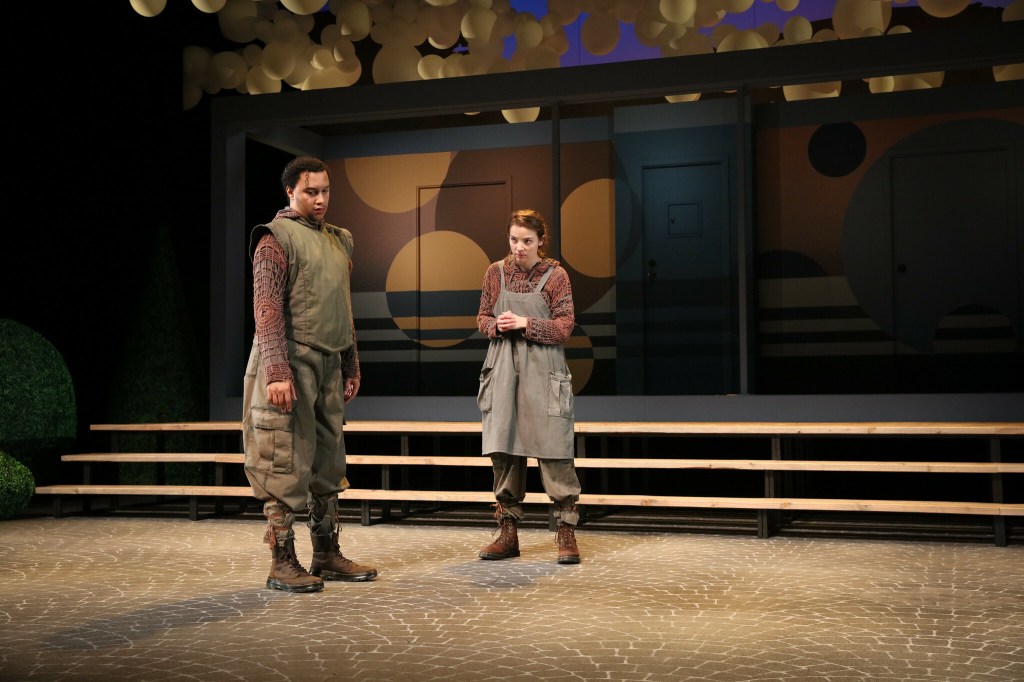
Tyler Andrew Jones as Sebastian & Lea Zawada as Viola in Twelfth Night, Or What You Will; photo by Andrés López, shared by Portland Center Stage

The impromptu-understudy, Dakotah Brown, did a stellar job. He acted through each scene with a professional grace, glancing down at the script but keeping up with his castmates as he embodied the lovesick duke who conscripts a woman-disguised-as-her-brother to woo a disinterested countess (surrounded by a no-nonsense steward and all-nonsense trio of drinking buddies also warring for her approval.)

The full cast included many familiar faces (“Midsummer Nights Dream” alumni Andrés Alcalá, Nicole Marie Green, Tyler Andrew Jones, Treasure Lunan, and Andy Perkins dazzled and delighted), a few folks new to me but not the PCS stage (Dana Green and Darius Pierce, both bringing heart and depth to their characters) and one PCS debut who slotted into the mix effortlessly and will hopefully be back for future shows (Lea Zawada, a sharp, expressive and hilarious Viola/Cesario). The Bard’s tale was in capable hands, and they deftly wove together the story of adoration, miscommunication, petty revenge and happy endings with collaborative expertise.

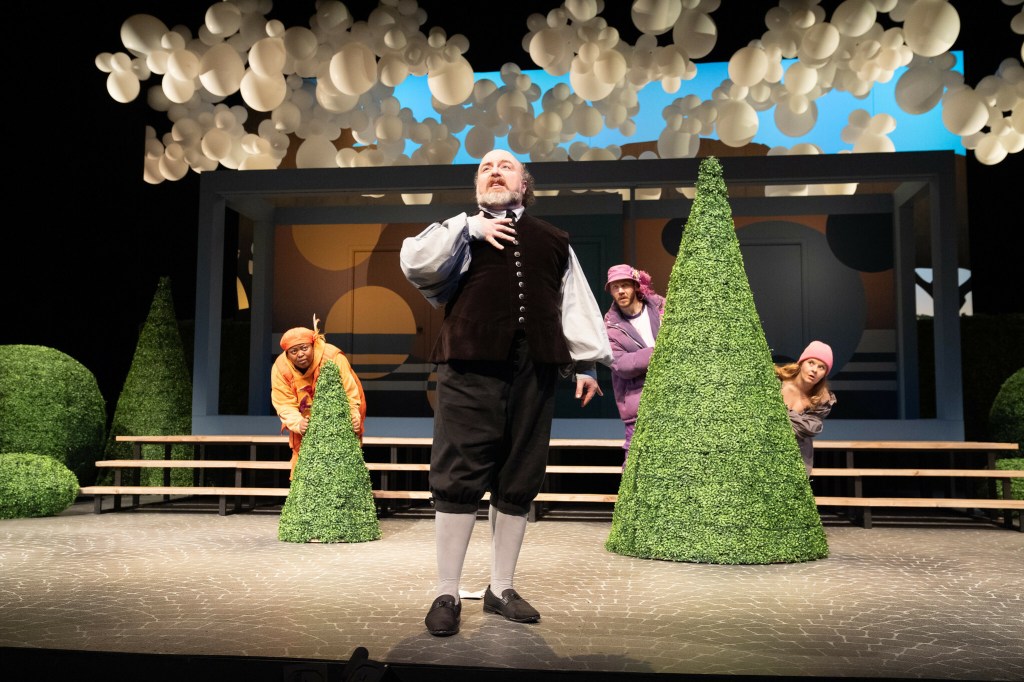
This production wasn’t exactly historical nor modern — it fell somewhere in the middle, accessible to contemporary audiences but not a full “She’s the Man” cell-phone-wielding remake. Sir Toby and Sir Andrew cracked open beers from a cooler, and in lieu of a black veil, Olivia obfuscated herself with sunglasses. The outfits were giving “Shakespeare but make it Portland,” with Viola and her twin in doc martens and Antonio sporting a mohawk. Costume designer Alison Haryer deserves a shout-out for putting the aforementioned beer-chugging sirs in matching neon tracksuits, inviting the audience to take them with all due respect (which is to say, none at all.) Peter Ksander’s sets were sleek and gorgeous, mostly free from props — minus the evergreen trees that enabled the best physical comedy bit in the show as the trio ducked and rolled around to evade detection.

Treasure Lunan as Sir Andrew Aguecheek, Darius Pierce as Malvolio, Andy Perkins as Sir Toby Belch, and Nicole Marie Green as Maria in Twelfth Night, Or What You Will; photo by Jenny Graham, shared by Portland Center Stage

I’d also be remiss not to mention one of the quietest but most impactful pieces of this production, the work of choreographer Muffie Delgado Connelly: short interludes in between scenes where Viola and Antonio, the isolated twins, mirror each other’s subconscious body language, a small wave of the hand or rub of the neck. It’s a welcome breath in between the dialogue-packed group scenes. More importantly, it connects the two storylines through their sibling bond and helps explain how no one can tell them apart.

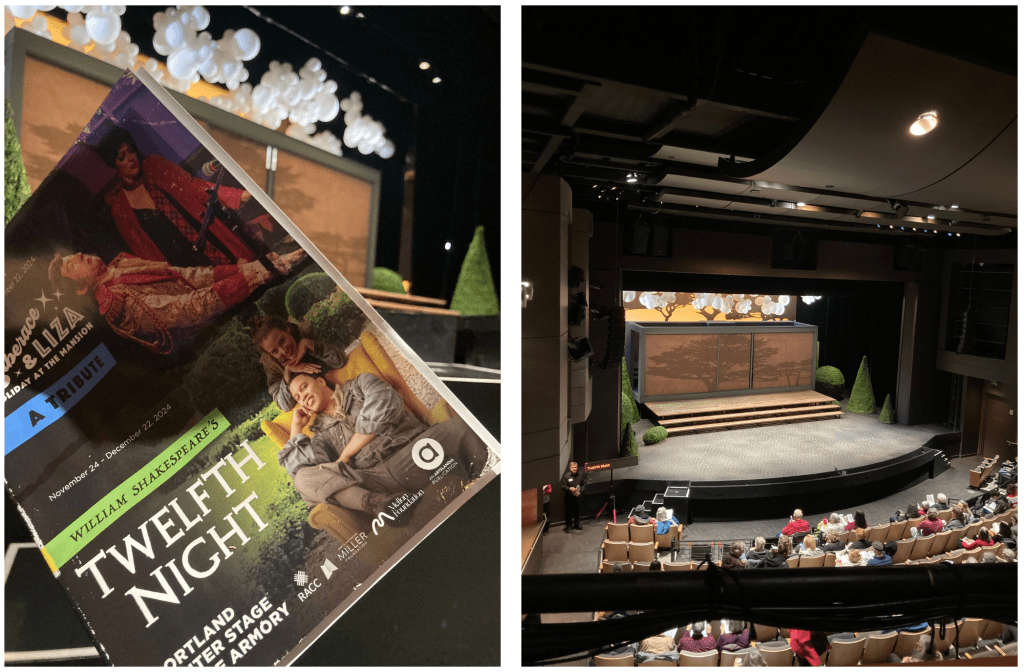
So, to answer the question from the beginning, did they pull it off? Absolutely. I devoured it, loved it, needed to see it again. As soon as I got home from opening night, I bought another ticket. I could have booked the very last performance, a fitting bookend against the first, but the third-from-last show, the Saturday matinee, was listed as an open-captioned production. As a hard-of-hearing person who uses subtitles for literally everything, I wanted to see how it would change my experience to be able to read Shakespeare’s text in real time.

Thus, after a tumultuous three weeks of real-life drama (though no sword fights or realizations the twin I’d assumed was lost at sea had accidentally married the person I was trying to friendzone… so I guess not THAT dramatic), I returned to the theater the afternoon of Dec. 21. I sat in the balcony, which gave me a birds-eye view of the stage but was still close enough to catch all their expressions.

This time, Setareki Wainiqolo (who played an unforgettable PCS Dracula a year ago) stepped into Orsino’s shoes with gusto, announcing “If music be the food of loveplay on!” with such charisma the audience understood why Viola fell hard.

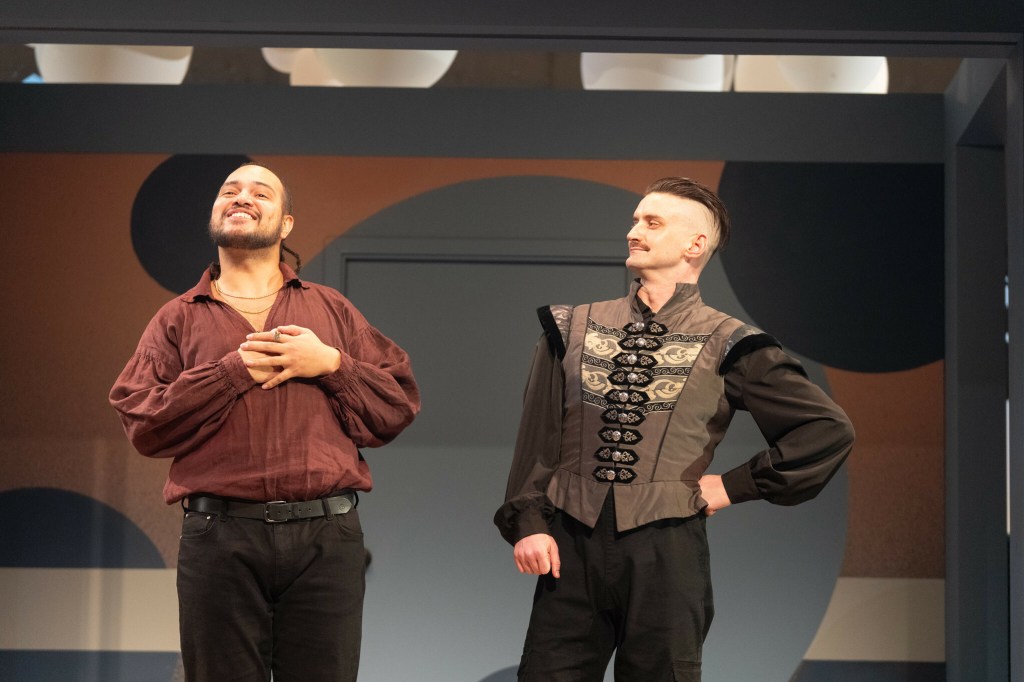
Setareki Wainiqolo as Orsino and Joshua Weinstein as Antonio in Twelfth Night, Or What You Will; photo by Jenny Graham, shared by Portland Center Stage

Without the uncertainty of a script-wielding stand-in, having seen it once before, and with the aid of a captioning display, it was easier for me to immerse myself in the story this time and just enjoy the antics. The only “new” pieces were two dance numbers that now featured Orsino — I now understood what the director, Marissa Wolf, meant when she mentioned alterations, because he’d been missing from those numbers in the first show. One of the enhanced-dances was a trio number with Orsino trying to dance with Olivia who’s trying to dance with Viola/Cesario who’s trying to dance with Orsino, all of them circling each other with barely-concealed desire, which perfectly encapsulated their whole dynamic and was just fun.

That’s what I love about PCS productions. They take nutrient-dense vegetables like Shakespeare and turn them into something you can consume, enjoy and feel satiated afterwards. Like a platter of sweet potato fries paired with a perfect aioli. (Is that a relatable simile, or am I just hungry?) As I return to the Armory time and time again to see familiar faces take the stage, I always know I’m in for a treat.

So after the holidays, I’ll be back to catch the next show at least once. (Probably twice.)

Thoughts from Oregon Ballet: ‘Midsummer Night’s Dream’

Reviews
Michael Linsmeier, Christopher Kaiser and Eva Burton; photo by Jingzi Zhao

/

Reflections after attending a performance of the Oregon Ballet Theater on October 8, 2022.

Walking up to Keller Auditorium on a temperate fall evening, I expected to find a line wrapped around the building that I could tag onto and perform the customary one-step-then-wait, two-step-then-wait shuffle toward the door. Instead I found the entirety of the to-be audience clustered in one big group across the street — and a fire truck with lights flashing parked outside. So the night was off to a great start.

We (the audience) never learned exactly what happened, but we could see firefighters moving around inside. I have to assume it was either A) a small fire they put out, or B) not a fire at all, maybe an alarm gone rogue; because about 20 minutes later, they cleared the venue and the hundreds of people waiting outside made the exodus across the street.

Everything seemed fine inside. Props to the Keller Auditorium staff because the show only turned out 15 or so minutes behind schedule (a veritable miracle considering the logistical challenges of scanning tickets, masking the unmasked, and getting everyone where they needed to be all at once, minutes before showtime.)

Even if it had been an hour late, I can say with certainty: the show was worth the wait. Let’s get into it.

Hush

Hush is a ballet that premiered in 2006 at the Houston Ballet, choreographed by Christopher Bruce; this was its Oregon Ballet Theater (OBT) debut. It follows a family of six circus performers in their life outside of the tent and showcases their lives individually and together. It’s set to an eclectic range of music from Bobby McFerrin and Yo Yo Ma.

The main theme I took from this piece was how a family is made up of individuals, but the family unit is an entity itself. I liked how it explored the way family members have their own personalities and stories, but when they come together they interact, play off of each other, and become something different. It showed the toll that parenting can take on a marriage and how much pressure falls on mothers to balance a hundred impossible-to-fulfill demands at once, often making them feel overwhelmed and alone. There was a father-daughter dance both playful and sweet. I enjoyed the piece and it gave me a lot to think about in terms of how these themes play out in real life.

Pas de Deux

Next was an eight-minute piece performed by two dancers, set to Tchaikovsky. The history of this piece is actually more dramatic than the dance itself: It wasn’t in the original Swan Lake, but the ballerina playing Odette in the 1877 Moscow production was so dissatisfied with the original song in that part that she requested a different composer to write a song to replace it. When Tchaikovsky found this out, he wrote his own replacement song with the same structure so they wouldn’t have to re-do the choreography. (The talent you have to have to be that petty…) However, because it wasn’t part of the original score, it was forgotten for over seventy years, until it was accidentally rediscovered in 1953 and converted into a standalone piece.

What I’m saying is that we desperately need a “The Office” style mock-umentary about this whole debacle, complete with deadpan-to-camera fourth wall breaks from Tchaikovsky.

Back to tonight’s performance: It definitely gave Swan Lake vibes (a compliment) and the OBT dancers were excellent. If they perform Swan Lake in the future, which I hope they do, it’d be cool if they could find a way to work this back in.

A Midsummer Night’s Dream

After intermission, it was time for the main event: ‘A Midsummer Night’s Dream’ choreographed by former OBT Artistic Director Christopher Stowell and set to music by Felix Mendelssohn. I watched a couple of “Explaining Shakespeare for Confused and Lazy Students” videos as a plot refresher before attending, and I’m glad I did. As a ballet instead of a play, I don’t feel like you need a line-by-line understanding of everything to enjoy the show, but it did make it more interesting to understand the motivations behind everyone’s antics.

The sets were inspired by the Pacific Northwest, which was a nice nod to the local production and gave a touch of realism against the fantastical costumes of fairies, larger-than-life bugs, and medieval lords and ladies. This was also the only of the three pieces where music was performed live by the OBT Orchestra, which was worth the price of admission just to hear.

This one also has real-life drama juicier than the plot: It includes the iconic wedding march, AND Mendelssohn wrote the whole thing when he was only 17 years old, AND after its first British performance the organist Thomas Attwood — a pupil of Mozart — left the score in a cab so Mendelssohn had to rewrite it from memory. (BUT the two later became friends and Mendelssohn wrote several songs dedicated to Attwood. So all’s well that ends well??)

Okay back to tonight’s performance: Incredible company of performers, incredible music, incredible sets, just lush and gorgeous and lighthearted and splendid all around. Special shout-out to the OBT School students who did a fantastic job and held their own on stage with the principal dancers; and to Eugene Ballet performer Nicholas Sakai, who stole the show as Puck.

Closing Thoughts

I love the ballet because it never fails to surprise me with what people are capable of. (People other than me, I mean. I have no delusions I am capable of that athleticism.)

One thing I took from all three performances, plot and production together: We are more than the sum of our parts. It’s one of the best, most surprising things about life.

Thoughts from the Oregon Symphony: Respighi’s Pines of Rome

Reviews
Reflections after attending a performance of the Oregon Symphony on June 6, 2022 at Arlene Schnitzer Concert Hall.
Photo of Arlene Schnitzer Concert Hall lobby, 6/6/22

Damn, I love the symphony.

This production was spectacular. It featured three composers: Ottorino Respighi (Ancient Airs and Dances Suite No. 3 and The Pines of Rome), Nathalie Joachim (Suite from Fanm d’Ayiti, “Women of Haiti“) and Ludwig van Beethoven (Overture to Cariolan.)

Joachim’s section in particular stood out because she was there in person to perform vocals and flute alongside the symphony. (Not to fault Respighi and Beethoven for their absence, because they have reasonable excuses….) Joachim’s suite was inspired by her Haitian heritage and specifically the strength, faith and joy of Haitian women. It was a rich, vibrant work infused with her home and her family, including clips she recorded of women singing in her hometown church.

Stray reflections on the production:

  • Music transcends language and cultural barriers. So many people from different backgrounds can play, listen to, and appreciate it even if they can’t understand each other through words.
  • The conductor – in this case, Oregon Symphony Creative Director David Danzmayr – is engrossing to watch. It’s almost like a dance where he leads and the musicians fall in step.
  • During Beethoven’s overture to Cariolan, I was struck by the ability to tell a story through the music. As soon as I read the notes in the program, I could picture the story in my mind. It reminded me of reading a book that’s so engrossing, you forget you’re looking at words on a page.
  • Even Beethoven, one of the most highly regarded figures in history, couldn’t have known the full impact his music would have on audiences hundreds of years later. Joachim got like 5 full minutes of standing ovation, so hopefully she saw the impact she had on this one audience, this one night. The themes of her music will stay with me long past the performance.

Review: ‘Pretty Woman’ musical has glossy surface, but no substance

Reviews
Review of “Pretty Woman: The Musical.” Attended touring production at Keller Auditorium in Portland, OR on June 4, 2022.
Creator: Hulton Archive | Credit: Getty Images
Copyright: 2012 Getty Images

Adapting the 1990 classic film “Pretty Woman” to the stage is a high-risk, high-reward scenario.

There are so many devoted fans — people who’ve seen the movie 50 times and can quote every word — that you have a built-in audience who will shell out for tickets. But the flip side of that is that any adaption will be compared frame-for-frame with the movie and if it comes down to Julia Roberts v. You….. that’s not a case you’re likely to win.

I’m not among the film’s devoted fans. It came out before I was born and I’ve only watched it once during my mom’s annual Christmastime film festival, “I Can’t Believe You’ve Never Seen This Movie from the 80s or 90s, We’re Putting It On Right Now.” So I went into the touring production of the musical with few expectations.

I’ll start with what I liked about it, and then explain why I think that was actually the show’s biggest mistake.

The positive: It’s fun. It has bright sets and costumes, cotton-candy-flavored-slushie sweetness, big ensemble musical numbers about following your dreams and uncomplicated kisses cementing the love of two characters destined for each other. There’s a lot to be said for a fun musical, a reminder that theater can whisk us to another world for three hours and leave us smiling and humming.

The problem is that “Pretty Woman” shouldn’t have been that musical. Because yes, it’s technically a Disney movie with a happy ending, but the premise is darker and the stakes are higher. The emotional impact of the story comes from a Vivian starting off penniless in Hollywood opulence, trying to scavenge enough money to pay rent through sex work that is both physically and emotionally taxing. Her journey, which could have been explored through solo ballads as she grapples with this newfound wealth and status at the expense of her values, is instead glossed over with a Cinderella treatment that immediately discards all the problems she faced, with no effort or contemplation on her part. We don’t see Vivian’s inner dialogue during this lifestyle whiplash.

It’s also a pet peeve of mine when the protagonist (and this often ends up being a female protagonist) is essentially carried along through the plot by the actions of others. This musical doesn’t give Vivian enough agency to make her feel like the hero. (As if they realized this at the eleventh hour of the writer’s room, they tacked in the line from the movie, “She rescues him right back,” even though Vivian didn’t do anything except wait for Edward to discover the concept of empathy.)

If the musical followed Vivian’s story from her point of view, looking inward and giving her room to grapple with real problems and real emotions, it wouldn’t be PG-rated. It would probably have to cut out some of the ensemble numbers that had the energy of a high school pep rally. Some patrons might be upset that it steered away from the movie. But it would have been more engaging and overall fulfilling when it reached the happy ending.

Here’s where I caveat that my complaints are with the book and music, not with this particular production. The touring cast was talented, fun to watch, and executed the source material as well as I think anyone could have. I look forward to seeing these actors again in other shows where they can dig beyond the surface and demonstrate their full abilities. This just wasn’t it.