Short Story: Heart of a Beast

Fiction, Writing Samples

I wrote a fantasy short story for a contest on Vocal.

The task: “A dragon finds a toddler in the forest. Write what happens next.”

It’s a 13-minute read — check it out here!

Fun fact: The contest was open for a month but I found out about it on the last day, when I was home sick with COVID. I sat down, spent six hours churning out a story, and submitted a minute before the deadline. Whether or not I win ($$ and a Zoom call with the fantasy writing legend, Christopher Paolini) it was a fun writing exercise.

(Update: Didn’t win. Still a fun exercise!)

Thoughts from Oregon Ballet: ‘Midsummer Night’s Dream’

Reviews
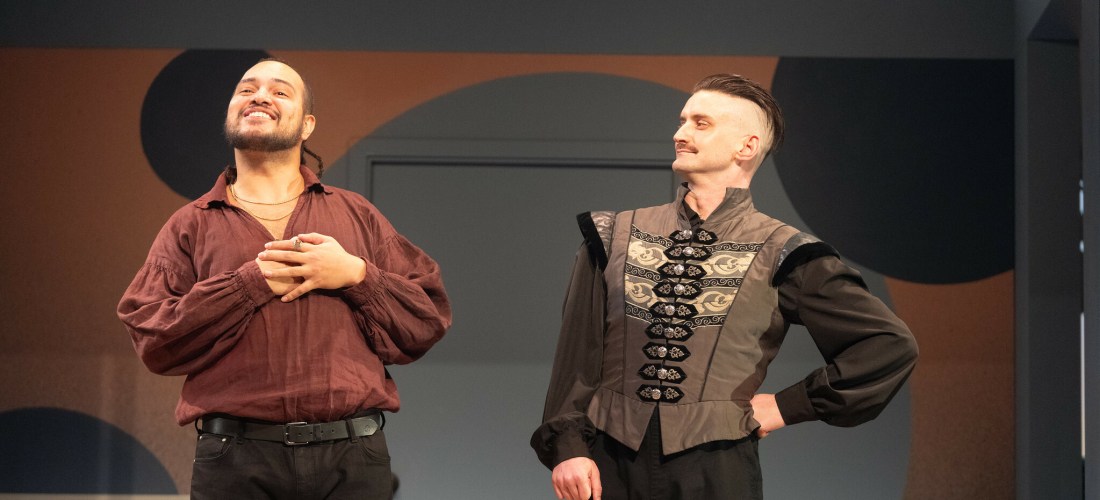
Michael Linsmeier, Christopher Kaiser and Eva Burton; photo by Jingzi Zhao

/

Reflections after attending a performance of the Oregon Ballet Theater on October 8, 2022.

Walking up to Keller Auditorium on a temperate fall evening, I expected to find a line wrapped around the building that I could tag onto and perform the customary one-step-then-wait, two-step-then-wait shuffle toward the door. Instead I found the entirety of the to-be audience clustered in one big group across the street — and a fire truck with lights flashing parked outside. So the night was off to a great start.

We (the audience) never learned exactly what happened, but we could see firefighters moving around inside. I have to assume it was either A) a small fire they put out, or B) not a fire at all, maybe an alarm gone rogue; because about 20 minutes later, they cleared the venue and the hundreds of people waiting outside made the exodus across the street.

Everything seemed fine inside. Props to the Keller Auditorium staff because the show only turned out 15 or so minutes behind schedule (a veritable miracle considering the logistical challenges of scanning tickets, masking the unmasked, and getting everyone where they needed to be all at once, minutes before showtime.)

Even if it had been an hour late, I can say with certainty: the show was worth the wait. Let’s get into it.

Hush

Hush is a ballet that premiered in 2006 at the Houston Ballet, choreographed by Christopher Bruce; this was its Oregon Ballet Theater (OBT) debut. It follows a family of six circus performers in their life outside of the tent and showcases their lives individually and together. It’s set to an eclectic range of music from Bobby McFerrin and Yo Yo Ma.

The main theme I took from this piece was how a family is made up of individuals, but the family unit is an entity itself. I liked how it explored the way family members have their own personalities and stories, but when they come together they interact, play off of each other, and become something different. It showed the toll that parenting can take on a marriage and how much pressure falls on mothers to balance a hundred impossible-to-fulfill demands at once, often making them feel overwhelmed and alone. There was a father-daughter dance both playful and sweet. I enjoyed the piece and it gave me a lot to think about in terms of how these themes play out in real life.

Pas de Deux

Next was an eight-minute piece performed by two dancers, set to Tchaikovsky. The history of this piece is actually more dramatic than the dance itself: It wasn’t in the original Swan Lake, but the ballerina playing Odette in the 1877 Moscow production was so dissatisfied with the original song in that part that she requested a different composer to write a song to replace it. When Tchaikovsky found this out, he wrote his own replacement song with the same structure so they wouldn’t have to re-do the choreography. (The talent you have to have to be that petty…) However, because it wasn’t part of the original score, it was forgotten for over seventy years, until it was accidentally rediscovered in 1953 and converted into a standalone piece.

What I’m saying is that we desperately need a “The Office” style mock-umentary about this whole debacle, complete with deadpan-to-camera fourth wall breaks from Tchaikovsky.

Back to tonight’s performance: It definitely gave Swan Lake vibes (a compliment) and the OBT dancers were excellent. If they perform Swan Lake in the future, which I hope they do, it’d be cool if they could find a way to work this back in.

A Midsummer Night’s Dream

After intermission, it was time for the main event: ‘A Midsummer Night’s Dream’ choreographed by former OBT Artistic Director Christopher Stowell and set to music by Felix Mendelssohn. I watched a couple of “Explaining Shakespeare for Confused and Lazy Students” videos as a plot refresher before attending, and I’m glad I did. As a ballet instead of a play, I don’t feel like you need a line-by-line understanding of everything to enjoy the show, but it did make it more interesting to understand the motivations behind everyone’s antics.

The sets were inspired by the Pacific Northwest, which was a nice nod to the local production and gave a touch of realism against the fantastical costumes of fairies, larger-than-life bugs, and medieval lords and ladies. This was also the only of the three pieces where music was performed live by the OBT Orchestra, which was worth the price of admission just to hear.

This one also has real-life drama juicier than the plot: It includes the iconic wedding march, AND Mendelssohn wrote the whole thing when he was only 17 years old, AND after its first British performance the organist Thomas Attwood — a pupil of Mozart — left the score in a cab so Mendelssohn had to rewrite it from memory. (BUT the two later became friends and Mendelssohn wrote several songs dedicated to Attwood. So all’s well that ends well??)

Okay back to tonight’s performance: Incredible company of performers, incredible music, incredible sets, just lush and gorgeous and lighthearted and splendid all around. Special shout-out to the OBT School students who did a fantastic job and held their own on stage with the principal dancers; and to Eugene Ballet performer Nicholas Sakai, who stole the show as Puck.

Closing Thoughts

I love the ballet because it never fails to surprise me with what people are capable of. (People other than me, I mean. I have no delusions I am capable of that athleticism.)

One thing I took from all three performances, plot and production together: We are more than the sum of our parts. It’s one of the best, most surprising things about life.

Thoughts from the Oregon Symphony: Respighi’s Pines of Rome

Reviews
Reflections after attending a performance of the Oregon Symphony on June 6, 2022 at Arlene Schnitzer Concert Hall.
Photo of Arlene Schnitzer Concert Hall lobby, 6/6/22

Damn, I love the symphony.

This production was spectacular. It featured three composers: Ottorino Respighi (Ancient Airs and Dances Suite No. 3 and The Pines of Rome), Nathalie Joachim (Suite from Fanm d’Ayiti, “Women of Haiti“) and Ludwig van Beethoven (Overture to Cariolan.)

Joachim’s section in particular stood out because she was there in person to perform vocals and flute alongside the symphony. (Not to fault Respighi and Beethoven for their absence, because they have reasonable excuses….) Joachim’s suite was inspired by her Haitian heritage and specifically the strength, faith and joy of Haitian women. It was a rich, vibrant work infused with her home and her family, including clips she recorded of women singing in her hometown church.

Stray reflections on the production:

  • Music transcends language and cultural barriers. So many people from different backgrounds can play, listen to, and appreciate it even if they can’t understand each other through words.
  • The conductor – in this case, Oregon Symphony Creative Director David Danzmayr – is engrossing to watch. It’s almost like a dance where he leads and the musicians fall in step.
  • During Beethoven’s overture to Cariolan, I was struck by the ability to tell a story through the music. As soon as I read the notes in the program, I could picture the story in my mind. It reminded me of reading a book that’s so engrossing, you forget you’re looking at words on a page.
  • Even Beethoven, one of the most highly regarded figures in history, couldn’t have known the full impact his music would have on audiences hundreds of years later. Joachim got like 5 full minutes of standing ovation, so hopefully she saw the impact she had on this one audience, this one night. The themes of her music will stay with me long past the performance.

Review: ‘Pretty Woman’ musical has glossy surface, but no substance

Reviews
Review of “Pretty Woman: The Musical.” Attended touring production at Keller Auditorium in Portland, OR on June 4, 2022.
Creator: Hulton Archive | Credit: Getty Images
Copyright: 2012 Getty Images

Adapting the 1990 classic film “Pretty Woman” to the stage is a high-risk, high-reward scenario.

There are so many devoted fans — people who’ve seen the movie 50 times and can quote every word — that you have a built-in audience who will shell out for tickets. But the flip side of that is that any adaption will be compared frame-for-frame with the movie and if it comes down to Julia Roberts v. You….. that’s not a case you’re likely to win.

I’m not among the film’s devoted fans. It came out before I was born and I’ve only watched it once during my mom’s annual Christmastime film festival, “I Can’t Believe You’ve Never Seen This Movie from the 80s or 90s, We’re Putting It On Right Now.” So I went into the touring production of the musical with few expectations.

I’ll start with what I liked about it, and then explain why I think that was actually the show’s biggest mistake.

The positive: It’s fun. It has bright sets and costumes, cotton-candy-flavored-slushie sweetness, big ensemble musical numbers about following your dreams and uncomplicated kisses cementing the love of two characters destined for each other. There’s a lot to be said for a fun musical, a reminder that theater can whisk us to another world for three hours and leave us smiling and humming.

The problem is that “Pretty Woman” shouldn’t have been that musical. Because yes, it’s technically a Disney movie with a happy ending, but the premise is darker and the stakes are higher. The emotional impact of the story comes from a Vivian starting off penniless in Hollywood opulence, trying to scavenge enough money to pay rent through sex work that is both physically and emotionally taxing. Her journey, which could have been explored through solo ballads as she grapples with this newfound wealth and status at the expense of her values, is instead glossed over with a Cinderella treatment that immediately discards all the problems she faced, with no effort or contemplation on her part. We don’t see Vivian’s inner dialogue during this lifestyle whiplash.

It’s also a pet peeve of mine when the protagonist (and this often ends up being a female protagonist) is essentially carried along through the plot by the actions of others. This musical doesn’t give Vivian enough agency to make her feel like the hero. (As if they realized this at the eleventh hour of the writer’s room, they tacked in the line from the movie, “She rescues him right back,” even though Vivian didn’t do anything except wait for Edward to discover the concept of empathy.)

If the musical followed Vivian’s story from her point of view, looking inward and giving her room to grapple with real problems and real emotions, it wouldn’t be PG-rated. It would probably have to cut out some of the ensemble numbers that had the energy of a high school pep rally. Some patrons might be upset that it steered away from the movie. But it would have been more engaging and overall fulfilling when it reached the happy ending.

Here’s where I caveat that my complaints are with the book and music, not with this particular production. The touring cast was talented, fun to watch, and executed the source material as well as I think anyone could have. I look forward to seeing these actors again in other shows where they can dig beyond the surface and demonstrate their full abilities. This just wasn’t it.

Public Relations Campaign: Best Friends Animal Society

Writing Samples

In my Public Relations Campaigns class during the fall 2018 semester, my partner (Nisa) and I were assigned to develop a proposal for a comprehensive integrated communications plan. We were assigned a real client, although we were not affiliated with the organization. Our client was Best Friends Animal Society.

I took this photo at Best Friends’ annual “Strut Your Mutt” event, which we attended as a part of our research.
And also to pet a bunch of adorable dogs.

Here is a selected portion of our plan, where we detailed the goal, objectives, strategies, and tactics we suggested Best Friends implement based on thorough research and analysis.


The “Meet Your New Best Friend” campaign utilizes multimedia content to increase awareness and attendance at events. The campaign’s goal is to bring more people into the awareness and evaluation/intent stages of the marketing funnel, hoping to bring them to events and reach the conversion stage.

The theme in this campaign is that an adopted pet can be your long-term companion and friend, and the relationship can benefit both you and the animal.

Goal: To increase overall awareness of and participation in Best Friends’ various animal rescue events/fundraisers.

Objective 1: To increase regional event attendance to 100 participants per event by the end of 2019.

  • Strategy: Develop online video series for animal lovers featuring footage of adoptable animals and event information to be shared via all main social media channels monthly.

Tactics:

  • Pick six adoptable animals and feature their stories through photos, videos, and interviews with their caretakers.
  • For each animal, produce a two-minute video sharing their story. At the end, include a call to action to register for a local event. (In the video and post, include a URL that directs users to the Best Friends website where they can search by zip code to find an event near them.)
  • Post videos to Twitter, Instagram, Facebook and YouTube.

Objective 2: By the end of the year, conduct events with five local animal shelters in states with worst animal homelessness problems to expand event possibilities.

  • Strategy: Develop a working relationship with select local animal shelters. Plan collaborative events that directly address animal homelessness.

Tactics:

  • Identify geographical areas with above-average rates of animal homelessness
  • Contact local shelters in those areas and arrange meetings with key stakeholders
  • Interview them about their community’s situation and needs
  • Develop events that address those needs, and co-host them with the local shelters

What ‘All the President’s Men’ can teach us about journalism and politics in 2018

Writing Samples

This piece was written for my Arts Journalism class. The assignment was to write a 700-800 word analysis of the movie “All the President’s Men” in the context of 2018 politics. I submitted the story on Nov. 5, 2018 and received a grade of 100 percent.

“Nothing’s riding on this except the, uh, First Amendment to the Constitution, freedom of the press and maybe the future of the country.”

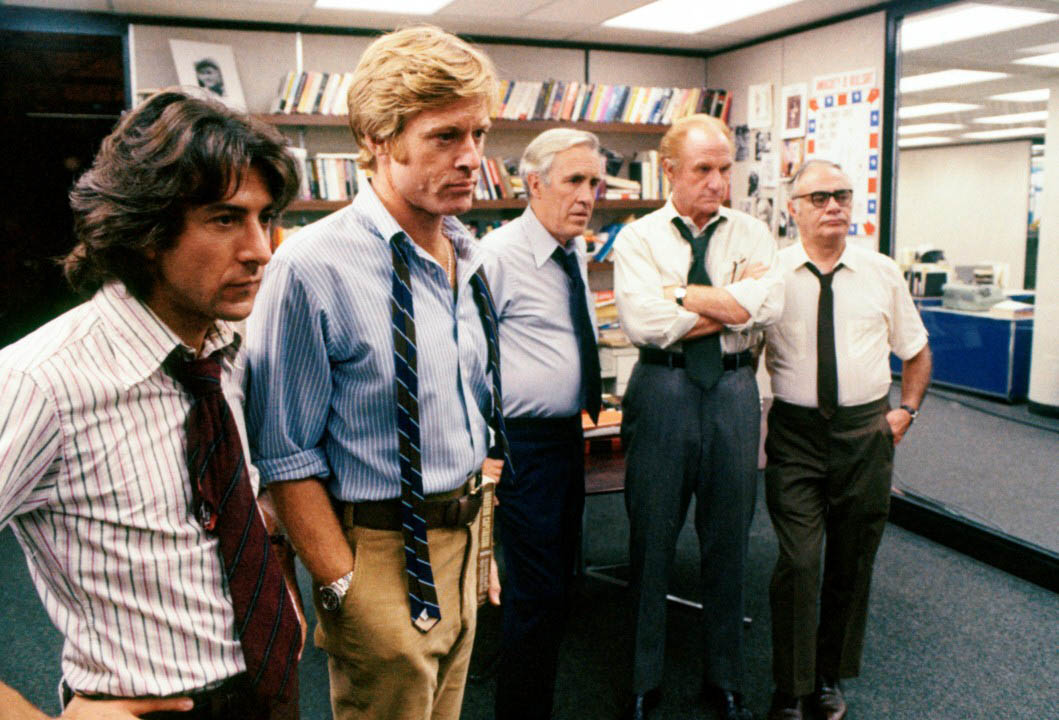
Ben Bradlee (played by Jason Robards) offers this quip to reporters Carl Bernstein (Dustin Hoffman) and Bob Woodward (Robert Redford) in the 1976 film about the Watergate investigation, “All the President’s Men.”

He urges the two reporters to check and re-check their facts before publishing their story, because it will rock the government and shake the future of America. (Which it did: the scandal led to 69 indictments, 48 sentencings, and Richard Nixon’s resignation.)

Aside from the very 1970’s hairstyles and rotary phones, the story rings true today. Here are three takeaways from the movie that apply to modern journalism:

  1. Reporting is a painstaking, unglamorous process

For some reason, many people think reporters just hit speed dial, talk to the president or their insider CIA agent, and write a 12,000-word piece with the facts from one or two sources. That couldn’t be further from the truth.

“All the President’s Men” offers a glimpse of the amount of cold calls, research, problem-solving, independent verification, writing, rewriting, and editing necessary for even a 200-word story. Yet even the movie cuts corners, by necessity: it had to boil thousands of hours of work into a two-hour film.

The audience also gets to “cheat,” in a sense, because they know that something big is going to come of the investigation. The reporters at the time had no guarantees that any of their work would mean anything. Often reporters spend months tracing a lead that doesn’t even merit a story. Yet they press forward, because that’s their job.

A behind-the-scenes look at Phoenix Theatre’s riveting new production of ‘Fun Home’

Writing Samples

This long-form feature was written for my Arts Journalism class. The assignment was to write a piece of 1200 words or more about an arts-related event or subject. I chose to write about a local theater production of “Fun Home.” I submitted the story on Oct. 12, 2018 and I received a grade of 100 percent.

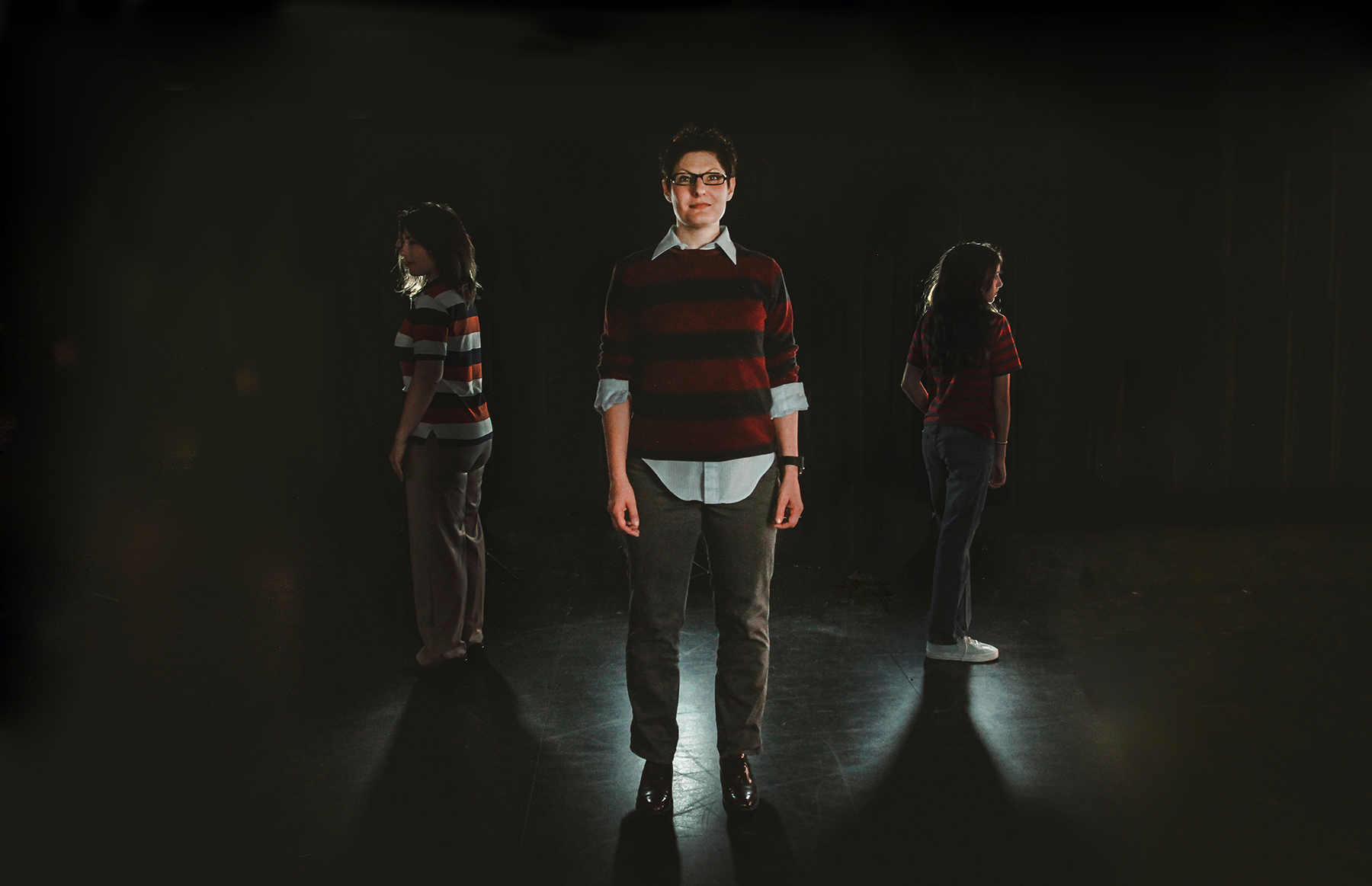
Photo courtesy of Reg Madison Photography

The title “Fun Home” conveys a sense of lighthearted wholesomeness. An ode to the 60’s or 70’s when families would gather around the dinner table for a chicken roast before congregating in front of a small TV to watch “Happy Days.”

When it’s revealed that “Fun Home” is short for “Funeral Home,” however, it takes on a grave new meaning.

That shift is at the heart of “Fun Home,” a musical that bounces between light and dark themes to explore the life of one woman through three time periods. The show opens at Phoenix Theatre this week.

Phoenix Theatre Associate Artistic Director Robert Kolby Harper is directing the production. He said the show is “a redefinition of what musical theater can be.”

“Many musicals don’t deal with universal themes,” he said. “They’re thought of as pure entertainment: ‘Take me away, make me feel happy.’ This does the same thing, but it’s satisfying.”


“She views her character, even though she happens to be a lesbian, as a human being first. If we all viewed each other like that, we’d realize our differences are way less than you imagine, less than our similarities.”


Robert Kolby Harper,
Associate Artistic Director at Phoenix Theatre

Hearing Down Under: Making Music with a Cochlear™ Baha®5 Sound Processor a Part of the Journey

Writing Samples

This article was written for Cochlear Hear and Now and published on Aug. 20, 2018.

Greetings from Sydney!

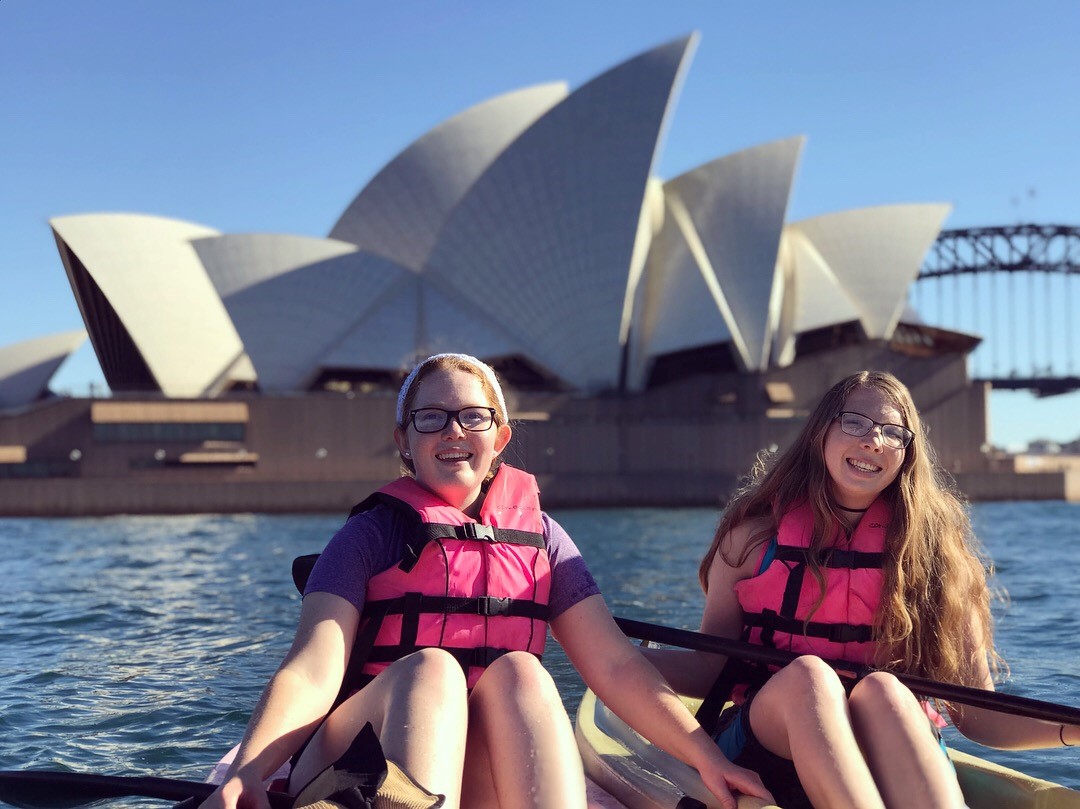
I’ve been on the road for about six weeks, and so much has happened. Two weeks ago my sister flew back to the United States—which means I’m officially traveling solo. Right now I’m staying in a backpackers’ hostel attached to Central Station. I’m right in the heart of the city and it’s been so exciting to meet locals and other travelers! Experiencing music with a Cochlear™ Baha® 5 Sound Processor has been one of the major highlights on this trip. Here’s a breakdown of how my Baha 5 Sound Processor helps me hear every note:

Rock Concerts

When we were in Adelaide a few weeks ago, our hosts invited us to attend a concert with them. Their nephew is the guitarist of a popular band, which was performing a sold-out show. (Luckily he was able to get us in!)

Because I knew it was going to be in a standing-room-only venue with lots of dancing and jostling, I made sure to wear my Baha® Safety Line in case my processor was dislodged.

Cochlear™ Baha® 5 recipient Patrick S. shares his experience playing soccer on the USA Deaf Men’s National Team

Writing Samples

This article was written for Cochlear Hear and Now and published on Oct. 21, 2018.

Soccer players must work together to defend their territory, move the ball forward, and predict the opposing team’s moves—all while working against the clock. In order to succeed, they need to communicate.

When all the team members are deaf or hard of hearing, communication takes on a whole new meaning.

Meet Patrick S., a Cochlear™ Baha® 5 recipient and defender on the USA Deaf Men’s National Soccer Team. His passion for the game has helped him find a community of likeminded players who inspire him to learn and grow—both on and off the field.

Estrella Jail inmates find a voice to tell their stories through Gammage’s Journey Home program

Writing Samples

Article and photos by Skylar Mason

This article was written for The State Press and published on April 5, 2016.

A young woman, probably in her late twenties or early thirties, takes a few nervous steps toward the audience. Tattoos cover her arms and neck, and “SHERIFF’S INMATE- UNSENTENCED” is printed in bold red letters across her black-and-white striped uniform. She clears her throat, glances around the room and begins to sing.

“I’m not the average girl from the video / And I ain’t tan like a supermodel / But I’ve learned to love myself unconditionally / Because I am a queen,” she sings.

Her voice starts quietly, then builds as the women around her smile in support. When she finishes the song, 12 other inmates join her in a circle and take turns reciting lines in a group poem about self-worth and community.

This isn’t a normal event at Estrella Jail, a Maricopa County facility that houses approximately 1,000 inmates, predominantly female. On Saturday afternoon, the 13 inmates gathered to present their capstone performance as a part of Journey Home, an arts residency program facilitated through ASU Gammage.