thoughts on AI in business writing

General Thoughts About Life and Stuff

a writer sharing their take on the rise of artificial intelligence large language models and what it means for the future of B2B thought leadership – how original!

okay so nothing i’m going to say here has never been said.

BUT. there’s so much discourse from all angles, so many takes, that i decided to put my stake down in my little acre of the internet. views expressed here are mine, not my employer’s.

let’s start with what it means to create. to be a writer means to struggle and care too much and endure trials and errors as you discover fifty things that don’t work for every one thing that does. it means there’s a really long, messy middle where it seems nothing’s going to come together. you have to sit and think. a LOT. you have to backtrack, but every word scrapped is still part of the process and teaches you something. the painstaking creation process unlocks more than you set out to do, means more than you set out to mean. you come out the other side with a piece of content and a new perspective.

you can probably see where i’m going with this: using AI to cut out the effort of creating means bypassing all of this thinking, experimenting, trying and failing and discovering.

the effect is twofold.

first, it’s bad for the writing. by nature, LLMs can only recycle what already exists from an algorithm that takes the sum of all its inputs and generates the most expected answer. it’s the antithesis of originality. if the bar is that low for what you’re creating, why bother creating it at all? but fine, say we’re all okay with an internet full of AI-generated thinkpieces that people use their own AI to synthesize and reshare. (i’m not, but stay with me.)

what i’m really worried about is how it’s bad for the writer. the reason LLM use is so enticing is because it removes the struggle from the act of creating. what would take six hours of research and brainstorming could take 30 seconds to write into an AI prompt that spits out 1200 words on the points you want to make.

right now, i’m being instructed to use LLMs for exactly that: the first draft. some people are saying that the human writer is still needed, but that we can come in at the second and third steps to polish the AI, to add in fresh insights and voice and human-ness. i’m being told that LLMs are a thought partner, an ideation tool, a way to make things easy for us. it won’t replace us, it’s helping us!

LOL.

there’s so many fallacies that i won’t get into there (check out all the other thinkpieces that exist) but in addition to all the dynamics related to job losses & chronic plagiarism, here’s what i’ll say:

a writer can’t come in at the second draft and expect to produce work as if they’d started it at the beginning. the first draft is absolutely pivotal, and if it takes the longest to create, that’s because it’s where the actual substance of the work is hammered out. researching and reading and asking questions and building a messy first draft are the bedrock of being able to create something new that’s worth saying. a writer uses their brain to connect all of those inputs and come up with fresh things to say.

without that struggle, nothing truly new can enter the discourse. LLMs will happily regurgitate what already exists, confidently peppering in falsehoods that an unresearched writer/reader cannot detect. it will never say something new. it can never challenge the status quo.

soon we’ll have a drought of carefully crafted, truthful writing that pushes the envelope.

if only there was a profession for that.

The Brothers Size, Part 3

Retrospectives, Theater

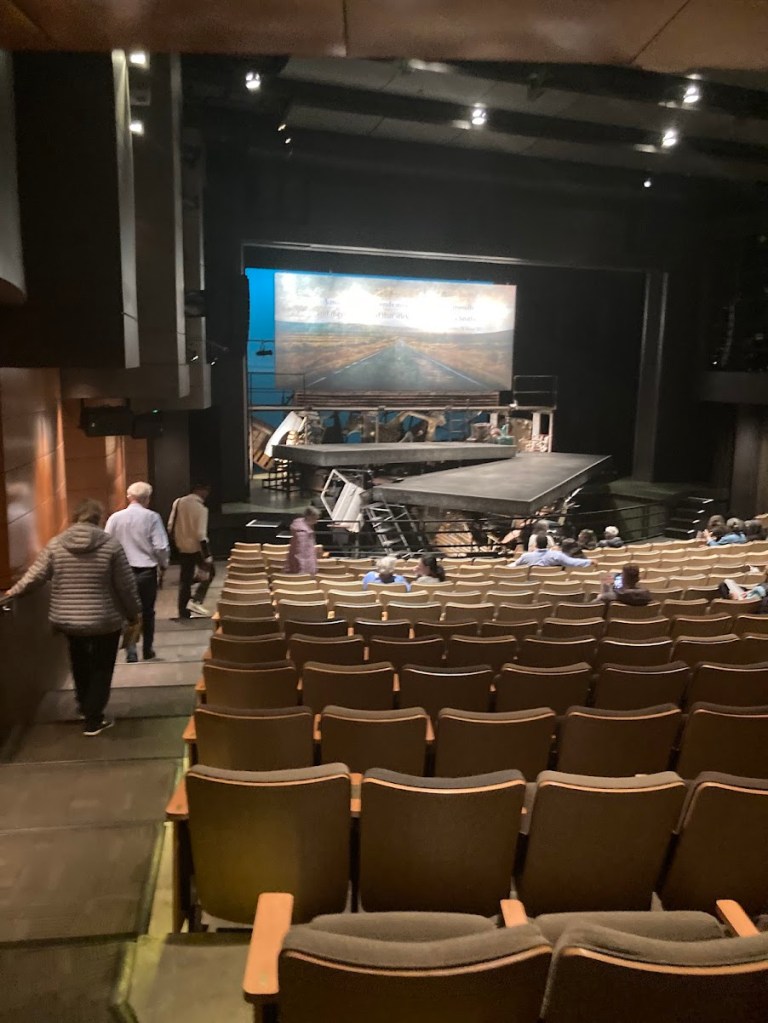
There was solemnity hanging in the air of the Armory as I walked down the orchestra steps.

Live theater is, by definition, ephemeral. But there’s something about seeing a production’s final performance that heightens that feeling, knowing it’s the last time these actors will speak or sing these words together, possibly the last time they’ll ever gather together in person.

For this show in particular, the sense of finality felt personal. I’ve spent the past month immersed in “The Brothers Size” and its distant-present Louisiana auto shop, as detailed in Parts 1 and 2. Today felt like a goodbye.

Before I get into the final show, let me fill you in on the past week. A few days ago, I had the absolute privilege to sit down and debrief with the show’s dramaturg, Kamilah Bush. It was supposed to be a class discussion, but I was the only student who came, so I basically got to gush all my thoughts and theories and favorite parts of the show and then have Kamilah explain what the production team’s intention was in designing every aspect.

It was a theater/literature nerd’s actual dream. I walked away with a deeper understanding and appreciation of every element of the show and how they fit together. (Unfortunately, this experience has also spoiled me. What do you mean, now I have to go back to seeing shows and not being able to debrief with the creative team??)

The other final gift was the script. Enrolling in the community college course granted me access to the full text of the play. In true college student fashion, I waited until the night before the closing show to read it. Between midnight and two a.m., fueled by pizza and root beer, I consumed and annotated the entire thing, peppering it with notes and observations from my previous viewings and my discussion with Kamilah. I picked up on so many things I hadn’t noticed or could connect to other elements. It was a perfect exercise to prepare for the final show.

That brings us to this afternoon, when I walked down the orchestra steps feeling a strange mix of excitement and sadness to be at the beginning of the end. I took my seat in the front row, far left, my very favorite place in the theater. (The rare instances I can’t see something onstage are frustrating, but worth it to be so close to the actors I can see every twitch of their mouth, glint in their eye, drop of sweat on their brow. The show is so much more palpable up close.)

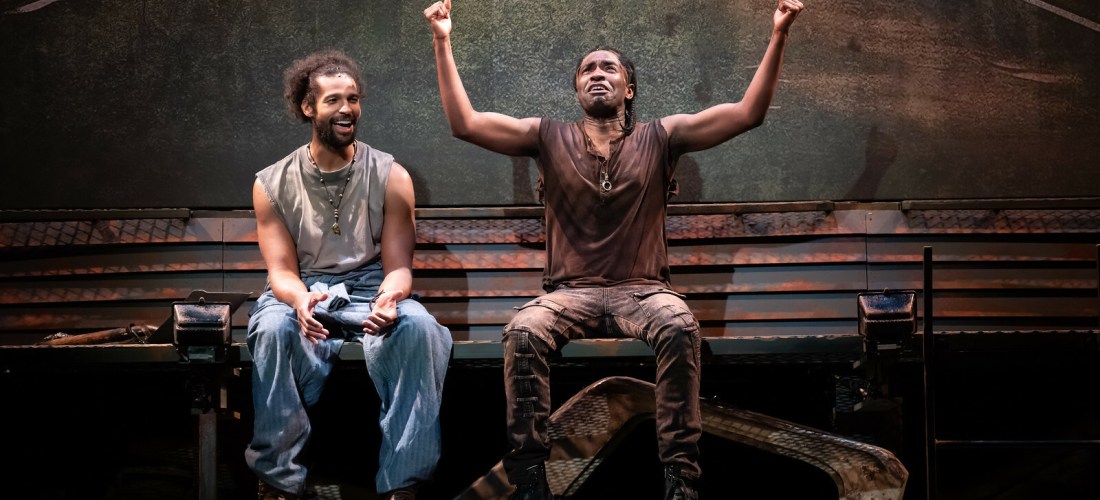
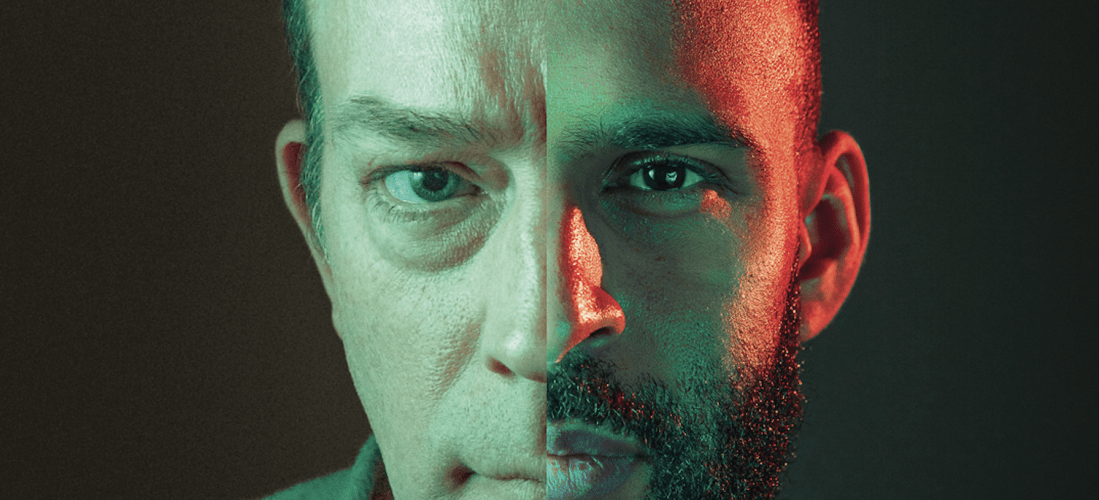
Featuring Austin Michael Young and Charles Grant. Photos by Jingzi Zhao. Courtesy of Portland Center Stage.

I reviewed the show in Part 1, so I won’t repeat all the praise I lavished on opening night, other than to say it all held true as the production came to a close. This was one of the greatest shows I’ve ever seen. (As a former theater beat reporter, I’ve seen a lot of shows.) Austin Michael Young, Charles Grant and Gerrin Delane Mitchell, with the support of the full PCS team, brought Tarell Alvin McCraney’s story to the stage with such care and skill, it was impossible NOT to be completely immersed in the world they built.

Which is why, when the lights came up and final bows were bowed, I left the theater in a haze. It was difficult to accept that it was truly over.

Well, was it? As I crossed the street and wandered aimlessly through Powell’s, found myself perched on the Guilder sitting-stairs with a tea and a scone, and then sprinted to catch the Streetcar home, my slow-and-steady realization was that the show was only over in the most literal sense.

If we think about art as not only something to be created and consumed in the moment but something to inspire deeper thinking and beget new ideas, then “The Brothers Size” — a show written in 2009!– is only beginning to work its magic. It brought me face-to-face with so many concepts that I’m going to keep reflecting on and will bring to other shows, my own art, and my sociopolitical understanding of the world.

The thinking and learning doesn’t have to end…. but this blog post does. So I’ll leave it here, very grateful for this unexpectedly three-part journey and anyone who tagged along by reading.

At the end of June I’ll step back into the Armory for the next PCS show, Kamilah’s adaption of “The Importance of Being Earnest” — after a book convention, road trip, wisdom teeth surgery, ballet, V.E. Schwab book launch, and two concerts. See you in 40 days!

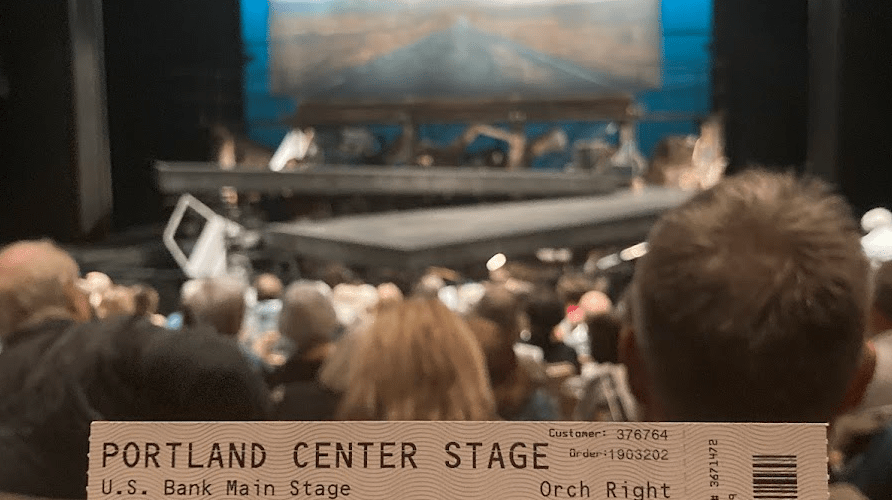
Ticket held in front of the stage for Portland Center Stage's "The Brothers Size"

The Brothers Size, Part 2

Retrospectives, Theater

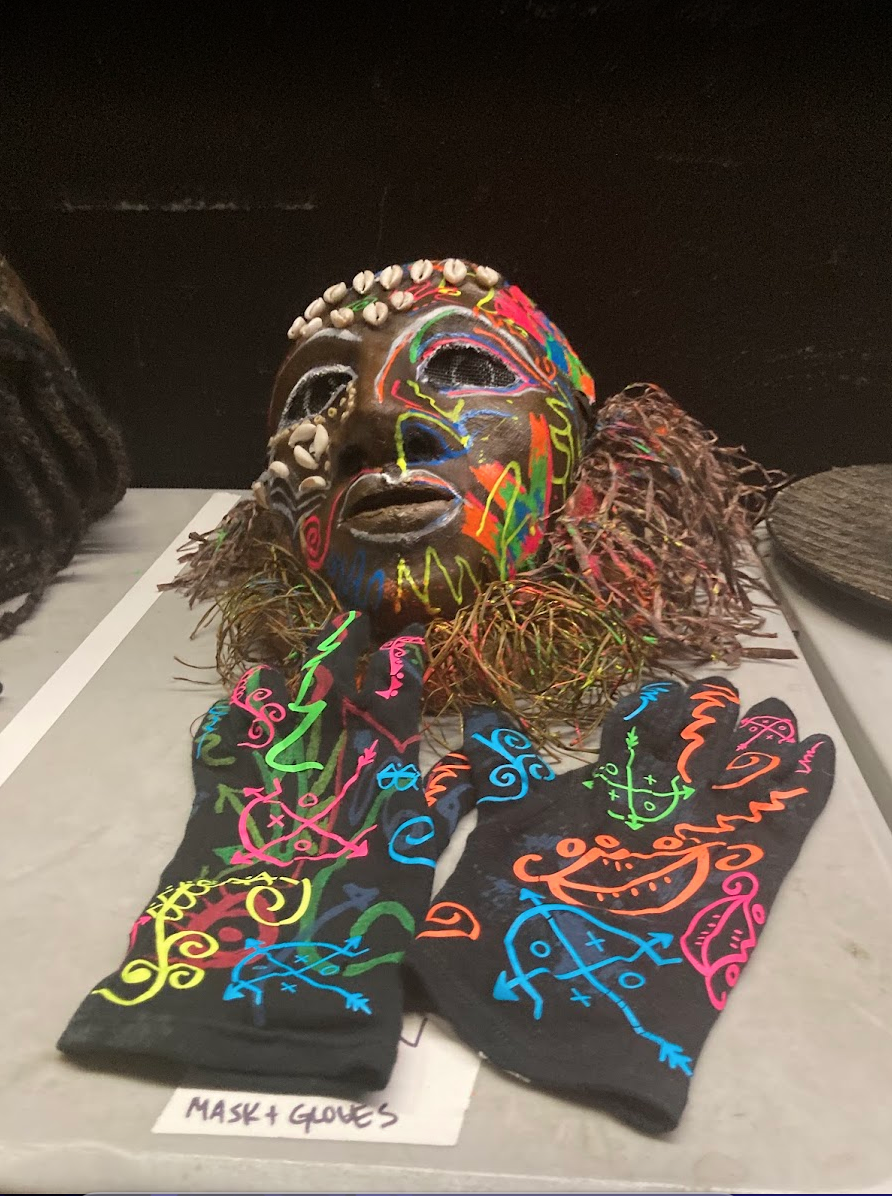
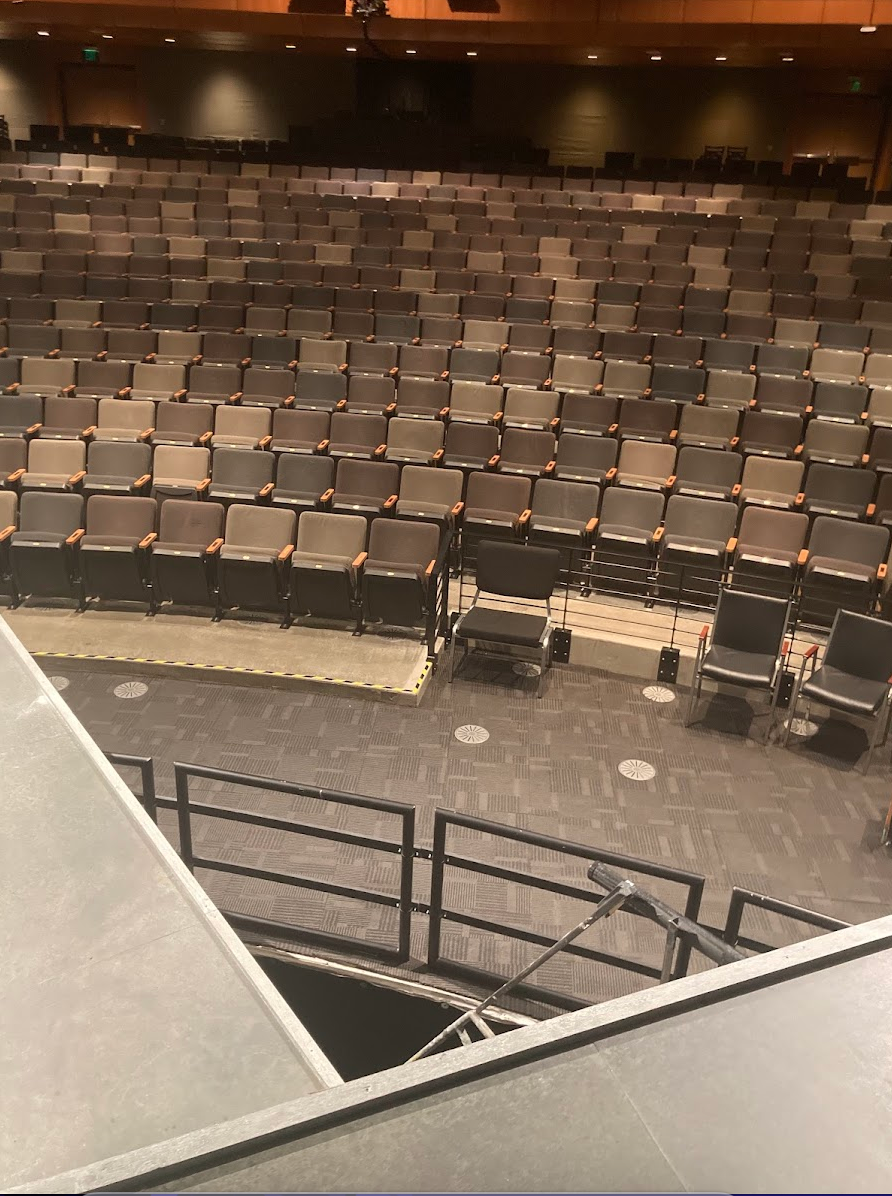
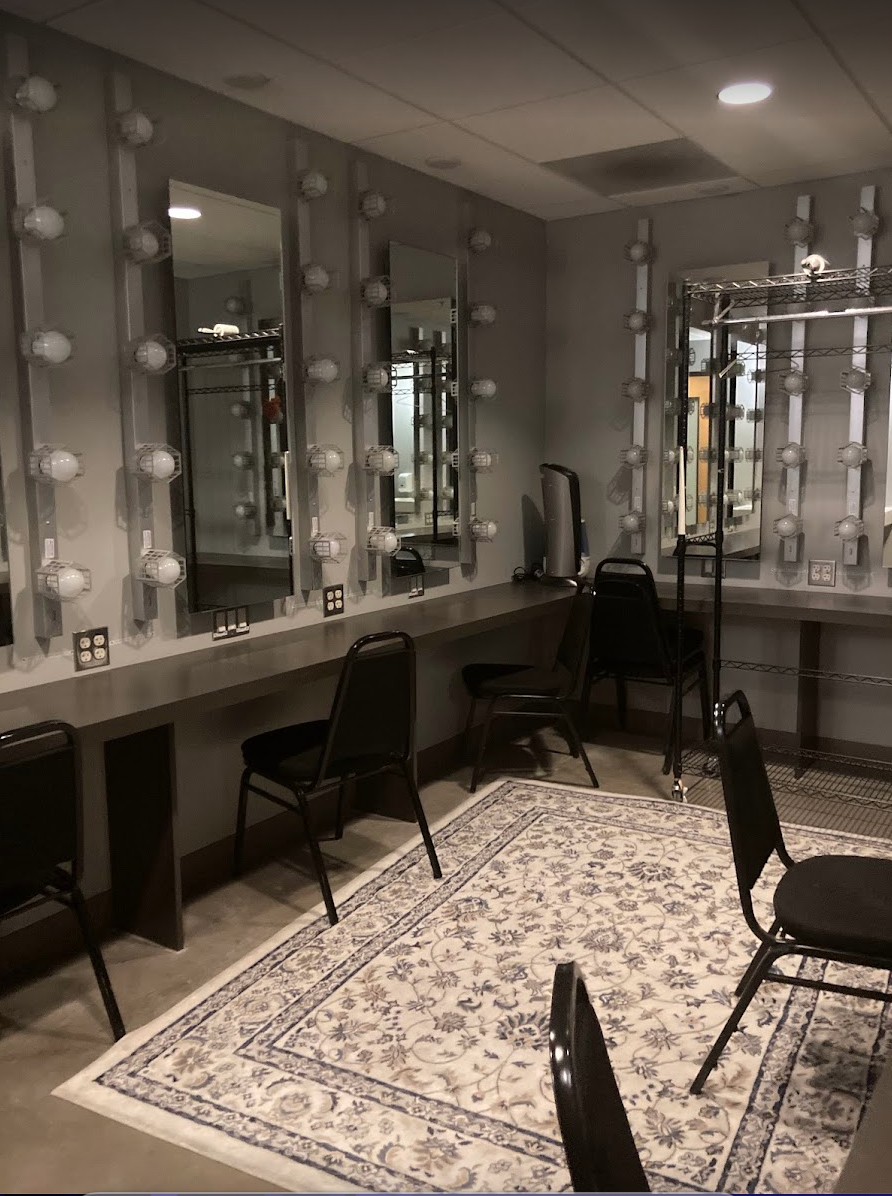
Fast forward twelve days and I’m standing onstage at The Armory looking out over 560 empty seats, riding up a backstage freight elevator with set builders, and standing in the costume shop asking designers about their process as they pin fabric to cast-measured mannequins.

[Freeze frame] Narrator: “You’re probably wondering how I got here. Well, let’s back up…”

Where we left off in Part 1, I loved opening night so much I bought another ticket for closing night and planned to write a second post.

What you don’t know is that a few days later, I saw that Portland Center Stage was also hosting a three-week “The Brothers Size” class led by PCS dramaturg Kamilah Bush. Week one, she would explain the background of the show and the process they took to create it. Week two, students would go on a backstage tour and then see the show. Week three, the class would meet again to discuss.

After a little internal back-and-forth with the reasonable side of me pointing out we were already going to see it twice and this class would be a big time commitment in an already-busy month and it was also a not-insignificant amount of money, and the other side of me being like, “but wouldn’t it be COOL?” you know which side prevailed. I signed up the night before the course started.

What I didn’t realize until I was halfway through registering was that the class was offered through Portland Community College, which meant by signing up I was literally enrolling and I’m now technically a community college student. I have a student ID number and PCC email address and everything. I have to say, it wasn’t on my 2025 bingo card, but this is what happens when you commit to the bit.

So now you’re more or less caught up: tonight was the ‘get a backstage tour and see the show’ night of class. As a longtime PCS showgoer, it was awesome to literally peek behind the curtain and figuratively see how the sausage gets made. It gave me a deeper appreciation for just how many people and how much time and thoughtfulness goes into a theater production.

Speaking of deeper appreciation, seeing the show after hearing about the history and behind-the-scenes process was also a completely different experience. Reading the script before class, I discovered there are no stage directions whatsoever — it’s up to each production to determine what the characters are doing in each moment. The set and costumes were likewise concepted completely by the PCS team. Playwright Tarell Alvin McCraney left all those decisions to the teams who would adapt his work — which Kamilah described as an ultimate form of trust. In class, I also learned how Ogun and Oshoosi are modeled after Yoruba gods of the same names — brothers, one steady and the other flighty. Elegba is a playful figure that represents crossroads with the symbol of a key. (There are echoes of all this within the play.)

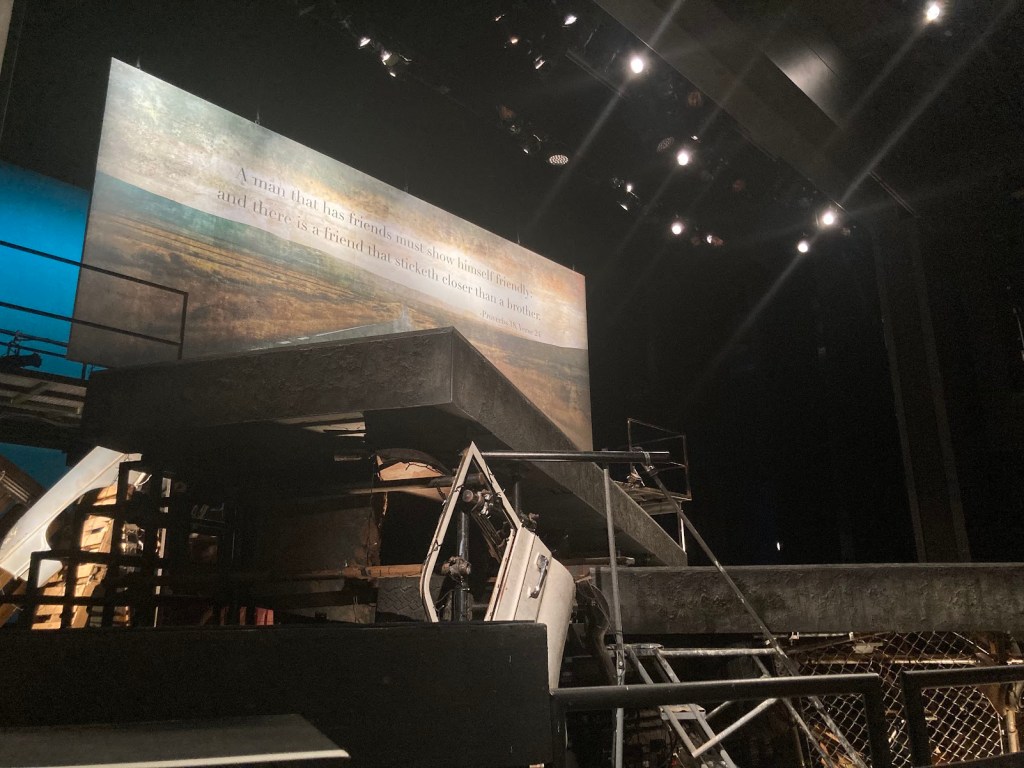
Now that I had a better sense of the plot, I could also spend more time observing the micro-dynamics: the relationships in space and word between characters, the transitions into dreams and flashbacks, the guitar-string tension driving the story forward. I also turned my attention to the backdrop, which reads:

“A man that has friends must show himself friendly: and there is a friend that sticketh closer than a brother. Proverbs 18:24”

Without totally spoiling the show (there’s still time to see it, if you’re reading this before May 18, 2025), that verse really is the heart of the play, but perhaps not in a way you’d expect. The show takes a really hard look at what it means to love someone when it’s not easy, when the way to help them is not clear. I think many people can relate to both Ogun (loving someone and wanting a different life for them) and Oshoosi (being the person feeling that pressure but unable to change your life to fit what they want.)

I’ve taken so much from this show, from this class, from really thinking deeply about the themes it offers and how they fit into my life. I’m incredibly grateful for all these opportunities to dig in. I have one more class next week, and then a front-row seat to the final show of this production.

See you in 11 days!

Two actors sit on a platform, one animated with arms in the sky.

The Brothers Size, Part 1

Retrospectives, Reviews, Theater

The best art can both 1) show you fictionalized things you’ve never seen before, and 2) make you feel like you’re watching a piece of yourself on the stage/page/screen.

Walking out of the opening night of Portland Center Stage’s “The Brothers Size,” I felt both. The show was one of the most electrifying, heartrending, original, and moving things I have ever experienced.

I’m still reeling, and I don’t think I can adequately convey everything I just experienced in words.

But I’m a writer, so I’m going to try.

The story itself is straightforward: it’s about two brothers. Ogun Size (played by Austin Michael Young in this PCS production) and Oshoosi Size (Charles Grant) are living together. More accurately, Oshoosi is crashing at his older brother’s house while he tries to get his life back on track a few months after getting out of prison. Underneath the brothers’ classic sibling bickering is deep-seated hurt from the two years they spent separated by bars. Complicating, well, everything, is Elegba (Gerrin Delane Mitchell), whose time in prison overlapped with Oshoosi’s and is now there for him as someone who can relate to his lived experience in a way his brother can’t. The triangle tension between the three is so simple and yet drives the entire show, plowing into some of life’s most difficult questions:

  • What does it mean to love someone — does it mean pushing them to be their best or giving them space to find their own path?
  • Do you put your trust in the people who’ve known you the longest or the people who’ve been through the worst with you?
  • How do we define what it means to be free when we’re all confined within systems and limitations outside our control?

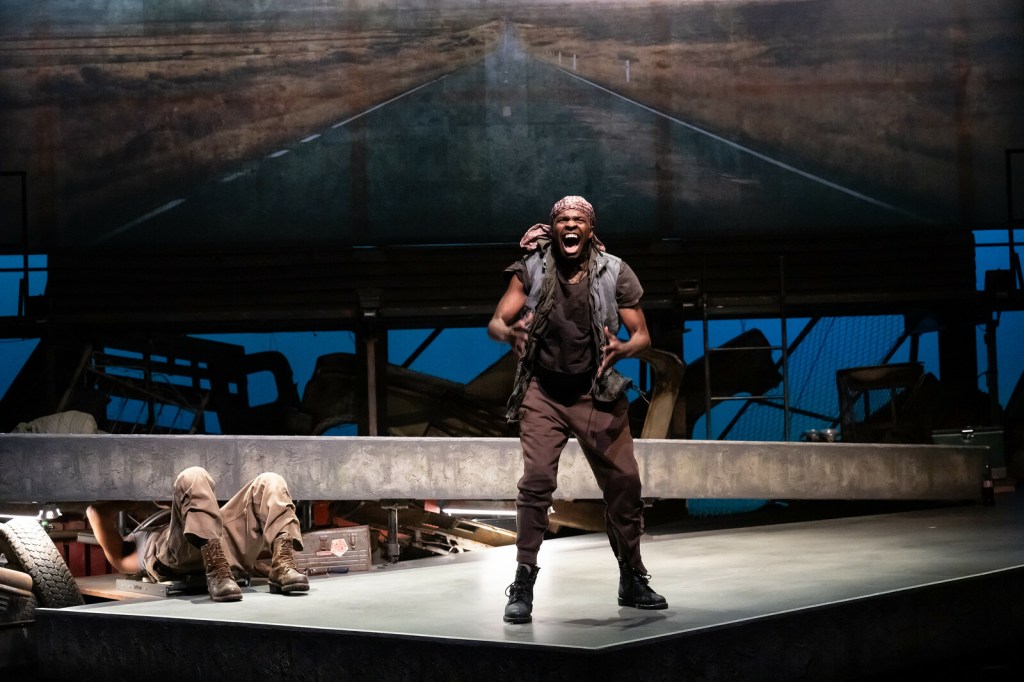
From everything I’ve said so far, it probably sounds like a grim, gritty play — but “The Brothers Size” doesn’t fit in that box. It was also funny, and visual, and musical, and experimental. For example, throughout the show, the characters break the fourth wall to announce stage directions before they perform them, so you hear it verbalized before you see it happen. Dream sequences of Yoruba cosmology featured neon-lit garb surpassing Coachella standards (credit to Dominique Fawn Hill, costume designer), which brought a fantastical edge that managed to fit naturally within the story. The stage was layered with levels of platforms that built dimension and real distance for the characters to scale (credit to Brittany Vasta, scenic designer.)

Featuring Austin Michael Young and Charles Grant. Photos by Jingzi Zhao. Courtesy of Portland Center Stage.

All of this added up to a show more than the sum of its parts. I often find myself writing something along the lines of “in less capable hands, this could have been a huge miss,” when I’m talking about shows doing something risky. That is true for this show on eighteen gazillion levels. There were so many pieces to this, and any one of them, had it been just a little off-kilter, could have ruined the whole thing. Instead, like a sixteen-step recipe in the hands of a Michelin-starred chef, it was a masterpiece.

And that simile isn’t even really a simile, because writer Tarell Alvin McCraney is the screen-and-stagewriting equivalent of a Michelin-starred chef, when you consider he wrote “Moonlight.” That’s right, HE WROTE “MOONLIGHT”!!!!

And just as “Moonlight” was semi-autobiographical, “The Brothers Size” pulls from McCraney’s lived experience: his brother went to jail and, in McCraney’s words, came out “completely changed, and there was no way to help him. I didn’t have the tools, the resources, the access – and still don’t – to make his life better.”

That explains why the heart of this story runs so deep, and why it works so well. It’s fiction, and it’s not. And knowing that Ogun’s anguish, his complete helplessness watching his brother suffer, is based on McCraney’s lived experience makes it that much more powerful.

Having had a stellar rewatching experience at PCS’s “Twelfth Night,” I just bought a ticket to see “The Brothers Size” again. I had to. And this time it’s a perfect bookend: the opening night and the final performance. Only instead of grouping both shows in one post, I’m going to share these reflections now and then come back with my thoughts after seeing it the second time.

I’m curious how it will be different: for me, when I know what to expect; and for the actors, who will have performed it 25 times between now and then. While they’re doing all those matinee and evening performances, I’ll go to the ballet, get a tattoo, visit another state, take my cat in for dental surgery, see Chris Grace as Scarlett Johansson, and host a dinner party. Then we’ll meet back at the stage for one more evening together.

See you in 23 days!

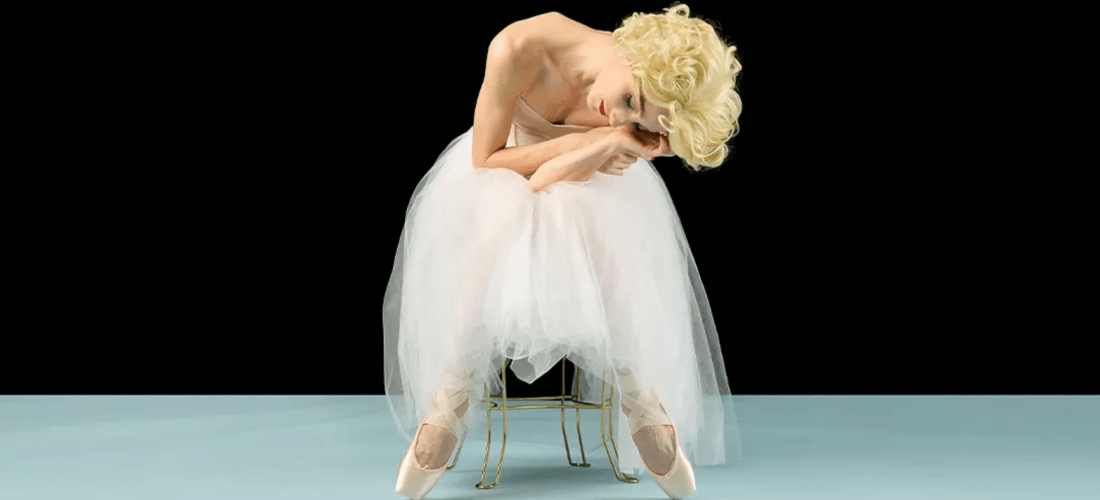
Marilyn Monroe™; Rights of Publicity and Persona Rights are used with permission of The Estate of Marilyn Monroe LLC. Carly Wheaton | Photo by Christopher Peddecord

You’ve never seen ballet like this

Reviews

Marilyn Monroe parts a sea of tuxedoed men and saunters down the stairs in a fuchsia gown, hips swaying as she twists wrists bejeweled with glittering diamonds over elbow-length gloves. She smiles at the audience, red lips bright in the spotlight. Then she steps en pointe and dances across the stage to a swelling orchestral arrangement.

Turning the story of Marilyn Monroe’s life into a full-length classical ballet is an idea that never in a million years would have crossed my mind. But luckily it crossed the minds of Oregon Ballet Theatre’s artistic director, Dani Rowe, and costume designer, Emma Kingsbury. According to the program notes, the idea sparked after they watched Kim Kardashian wear Monroe’s dress to the Met Gala and then viewed prints of Andy Warhol’s series depicting Monroe in both color and black and white, perfect and imperfect.

“This contrast spoke to the duality of her persona — the radiant star and the woman struggling with inner demons,” Rowe wrote.

Unlike OBT’s recent productions of “Giselle,” “The Nutcracker,” and “Swan Lake,” (all incredible, by the way) this show was created from scratch by Rowe and the OBT team. I saw it a week into the world premiere production – one of the last performances here in Portland before the show moves on to Oklahoma and Ohio to be performed by their local dancers.

As an original production, there are a million ways the team could have chosen to produce it, merge the story and the form, and make a statement. Many of those approaches could easily have fallen flat. Fortunately, the OBT team pulled it off, creating a brilliant amalgamation of two great things made better through the act of combining them. A chocolate-covered potato chip, if you will.

Narratively, the show tells Monroe’s story through her relationships with the people closest to her: her troubled mother, a series of foster parents, a first love, acting school classmates, second and third loves, a psychoanalyst, and a seemingly neverending stream of costars and production teams. This approach allows the audience to see Monroe not as a static image but as a growing person with as many dimensions as her signature diamonds.

Not exactly a character but a force nonetheless are the paparazzi, portrayed by a series of figures masked and wearing dark uniforms, who lift her up and carry her away and take flash photos and enable and block and comfort and frustrate her in equal measure. Their presence on the stage helps visualize what must have been running through her mind with every step, every word, every smile: people were watching her. Over the course of the show the paparazzi became more aggressive, requiring her to choose whether to fight or let them sweep her off her feet, away from those who know her as a person.

As Rowe said in the quote above, the show focuses on exploring the dichotomy of this dazzling celebrity figure and the real person underneath. On the surface it’s a rags-to-riches story, but digging deeper, we see that the forces that brought her out of poverty and into the spotlight also prevented her from living the life she wanted and connecting with the people she loved. One of the scenes that will stick with me is Marilyn swinging on a (real) rope swing, wistfully watching four women dote on their baby carriages. She wants what they have. They idolize her. Both sides yearn in a “grass is greener” complex. For my part, I sat there watching from the box seat I purchased with my own money, grateful those are no longer the only two life paths afforded to people born female.

I loved, loved, loved seeing the familiar company of OBT dancers in new costumes and environments. They traded the beige and white tunics and corsets of most classical productions for a 1940’s/1950’s wardrobe of neon A-line skirts and business suits — clothing that could make you forget you were watching a ballet until the dancers started dancing. The standout costumes were, as to be expected, Monroe’s: the aforementioned bright pink gown, the white grate-fluttering dress, the President’s Birthday skintight skin-toned number. As much as the show was about de-idolizing Monroe, it was impossible not to get a little swept up in the same allure that captured the world. On the Newmark Theatre stage, she shone.

Carly Wheaton | Photo by Christopher Peddecord, shared by Oregon Ballet Theatre

The cast in this performance was full of my favorite dancers: credit is due to Jessica Lind (Monroe), Charlotte Zogas (child Norma Jeane), Eva Burton (mother), Hannah Davis (young Norma Jeane), Benjamin Simoens (James & psychoanalyst), John-Paul Simoens (Joe & father), Brian Simcoe (Arthur), and Bailey Shaw (Kennedy), as well as the entire ensemble. As with every OBT performance, I was amazed at their technical skill and amazed at how they made me feel the full range of human emotion through wordless movement.

I’ll end with the ending: Monroe, dying a relatively un-dramatized death, a poignant flashback of her youth and dancers from each era of her life, and then giant, sheer tapestries of Warhol’s depictions fluttering down and filling the stage as real recordings of Monroe’s voice played.

After two hours of no voices — just Shannon Rugani’s captivating prerecorded score — Monroe’s voice caught me by surprise and served as a visceral reminder that this was a real life, cut short far too soon. Tears streamed down my cheeks as the curtains fell.

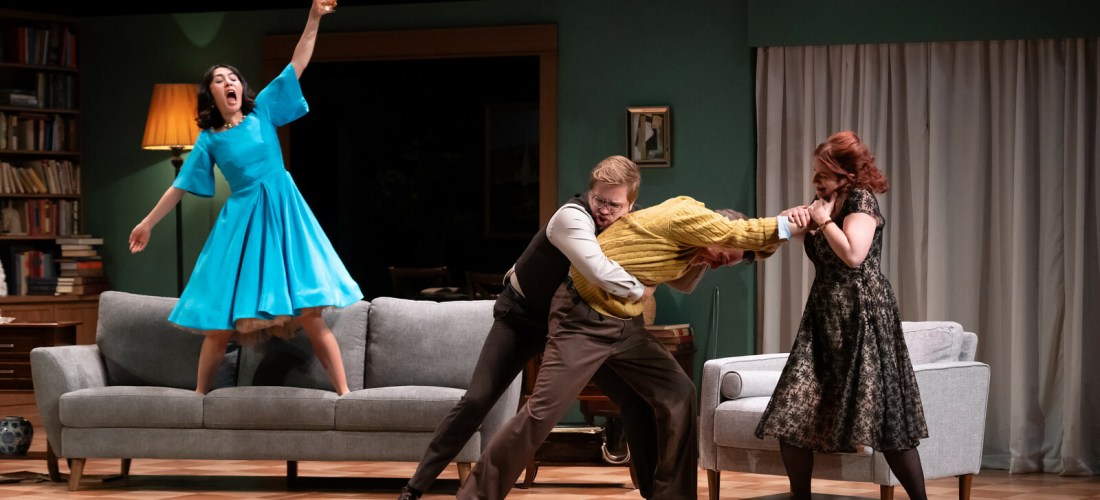
Photo of four actors: three engaged in a struggle, one standing on a couch hoisting a drink and yelling

Who’s Afraid of Virginia Woolf? (You Should Be)

Reviews

A woman waves around a nearly-empty glass of gin, cozying up to the man on the couch next to her and complaining about all the ways her husband doesn’t measure up. Behind her, the husband in question stalks forward with a gun, aiming it at her head. She turns around and a houseguest screams just as he pulls the trigger — and an umbrella shoots out, spreading harmlessly across the space between them. The party gag elicits nervous laughter and tall pours of hard liquor.

“Who’s Afraid of Virginia Woolf?” spends over three hours frolicking in this sandbox of domestic dark absurdity. The 1962 play by Edward Albee follows two couples on a highwire strung taut over the course of one night as they fight over power, desire, and truth. The gun may have proven harmless, but the couples’ words are locked, loaded, and aimed to kill, demonstrating that those who know us best have the greatest power to hurt us.

Albee’s script calls for a lot of monologuing and sitting. It was also, I repeat, over three hours long. A lesser production could have stumbled at the road blocks, leaving the audience bouncing their legs waiting for it to end. But Portland Center Stage’s expert cast and crew accepted the challenge and delivered an electric performance that made the evening fly by.

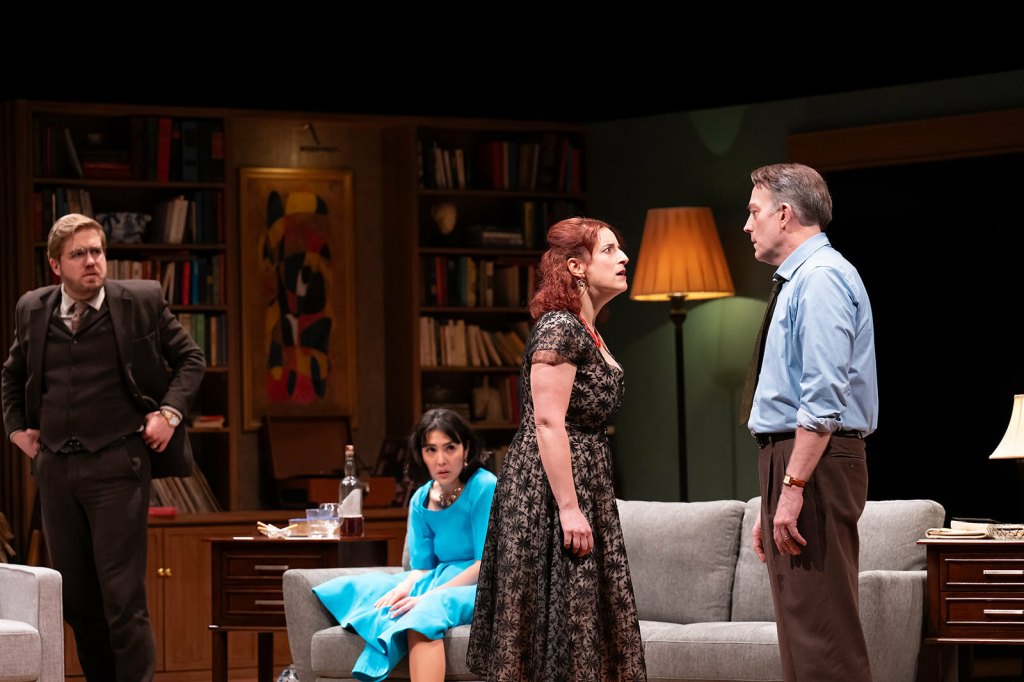
Martha (played by Lauren Bloom Hanover) and George (Leif Norby) met each other on the verbal battlefield with equal and opposing force, taking turns playing victim and aggressor as the evening ramped up, teetering and crashing into mutually-assured destruction — the kind of wreck you can’t look away from. To offer a counterbalance and serve as pawns in their games were Nick (Benjamin Tissell) and Honey (Ashley Song), a two-decades-younger couple with the bright-eyed, bushy-tailed optimism the older couple covets and detests. Under the tutelage of alcohol, the four unbutton and unmask themselves to reveal darker needs and fears broiling underneath.

For anyone as unfamiliar with the play (or the 1966 film starring Elizabeth Taylor and Richard Burton) as I was, allow me to explain what confused me: it’s not about Virginia Woolf at all. The title is taken from a recurring bit where Martha and George hum the Disney tune, “Who’s afraid of the big bad wolf,” but sub in Virginia Woolf, whose sometimes cryptic writing was focused on removing layers of pretense. Albee confirmed the “fear” in question is really the fear of living life without false illusions.

(L to R): Benjamin Tissell, Ashley Song, Lauren Bloom Hanover, and Leif Norby; photo by Jingzi Zhao. Shared by Portland Center Stage

PCS has a flair for modernizing older texts (see their deftly current Shakespeare adaptions I’ve gushed about earlier, where characters tromp in Doc Martens and mohawks), but this production retained its 1960s setting and style. That didn’t keep it from touching on several topics which felt disquietingly applicable to the current moment, such as:

  • The tension between history and science/technology, when those who study the transgressions of the past see familiar ideology springing up in the name of “progress” and “perfection.”
  • The clash of generations, with the younger scrabbling for a secure foothold and the older watching with a cocktail of jealousy and regret at the years they spent climbing the same hill with nothing to show for it.
  • The ways women are presented with a narrower set of choices, a biological and sociological ticking clock, and a reliance on men who may have ulterior motives when they say, “I do.”
  • And an increasingly urgent topic: the question of what is truth, what are lies, and how do you tell the difference when you can’t verify it yourself? At the end of the play, some truths come to light. Other questions leave Nick, Honey, and us in the dark. In this time of disinformation and the federal government erasing records of history, it hit close to home.

Speaking of modernization, and Easter egg’d in the title of this post (in true Taylor Swift fashion), we have to talk about “Who’s Afraid of Little Old Me?” Look at how the lyrics parallel the play: “Is it a wonder I broke? Let’s hear one more joke / Then we could all just laugh until I cry,” and an even more direct reference: “So all you kids can sneak into my house with all the cobwebs / I’m always drunk on my own tears, isn’t that what they all said?”

(Martha jokes – is she joking? – that the ice in their drinks comes from her and George collecting the tears from their unhappy marriage in the ice tray.)

It’s funny how theater can galavant our real-world problems, transforming unspoken anxieties into booming soliloquies, and it still somehow feels like catharsis. Sometimes we need to say the quiet parts out loud, or hear them spoken. This production did just that. Like a hangover after 15 glasses of gin or an unkind remark from someone you love, it left its mark.

Let’s Talk About “Bad Books”

General Thoughts About Life and Stuff

When I was ten or eleven, I read “Little Women” and I hated it.

Spoiler alert (even though it was published in 1868 so we’re well past the statute of limitations on spoilers), one of the titular little women dies. As a child who had until that point been immersed in Magic Treehouse and YA horse books, I was shocked and devastated. I slammed the paperback shut and told my best friend it was a terrible story and together we disavowed it for a solid decade. It wasn’t until I watched the Greta Gerwig adaption in 2019 that I came back around to it, and now I recognize “Little Women” as one of the greatest, heart-wrenchingly wonderful stories ever written.

What changed? In short, I realized that just because I didn’t like what happened in the story doesn’t mean it was a bad story.

I bring this up now because last night around 1:30 a.m., I finished reading “People We Meet on Vacation” by Emily Henry. Overall I really enjoyed it, but I had a qualm with an unresolved piece of the ending and I was curious if other people felt the same, so I pulled up the book’s Goodreads page. As I scrolled through and read about 50 of the first displayed reviews– a mixed bag varying from one to five stars — I found a lot of the one-star reviews repeated the same things.

This should have been dual-POV.

There was too much writing about the travel and destinations, and not enough about their physical chemistry.

I didn’t like the main heroine.

Those are totally valid thoughts/opinions that a person can have when reading a book. But opinions about a book are not the same as a book review. Reading them reminded me of little me saying “Little Women” was a bad book because I didn’t like that a character died. Which brings me to my point:

No piece of art is designed to make everyone happy.

(And that’s okay.)

Social media algorithms feed us a steady stream of the exact content we want to look at, made by people who have similar lifestyles and opinions. The more we consume it, the easier it is to distance ourselves from anything that wasn’t made for us. It’s not just social media, either — we have more books, more news channels and more public figures than ever, so we don’t really need to engage elsewhere.

Then, when we come across something that falls outside that bubble, there are three possible reactions (see if you can rank them):

A. Huh, that’s different! I’m going to read/watch it and experience this new perspective.

B. Hm, that’s not for me, so I’ll skip over that.

C. That doesn’t align with what I think, so I’m going to tell everyone including the creator that it is bad and could be better if they had made what I wanted it to be.

(Answer Key: A wins, B is neutral, and C is where we have a problem. With the caveat that this doesn’t apply to, like, hate speech and misinformation. Please report that and scroll on.)

If you think the best book is a dual-POV book, great — write a dual-POV book! Choose to read dual-POV books! But don’t review a single-POV book poorly because it’s not dual-POV.

Similarly, I don’t eat meat but I don’t downvote non-vegan cooking videos that I stumble across. Either I’ll see if I can take what they recommend and vegan-ize it myself, or I’ll just move along.

If something wasn’t created to your specifications, you don’t have to tell the world with a one-star stamp. And if it doesn’t make you happy, that doesn’t mean it’s bad art.

Don’t get me wrong, I love a feel-good piece of escapism media. Give me fluffy, happy books all day. Life is hard and art offers a chance to live different lives and be different people. When you’re immersed in the page, you can fly with dragons, or take down the mafia, or always have a witty comeback ready in the moment your work enemy fires a snide remark. Y’know, aspirational stuff.

But art is also designed to challenge us to consider different perspectives, wrestle with new dilemmas and think beyond ourselves, and that means taking the reader to hard places. “Little Women” wouldn’t have been the book it was if [NAME REDACTED IN CASE YOU REALLY DON’T KNOW YET] hadn’t died. Same with “Where the Red Fern Grows,” “Bridge to Terabithia,” “Black Beauty,” etc. Loss and grief are transformative and crucial to literature as much as they are to life. We grow the most when we’re stretched beyond what we think we’re capable of handling.

In summation:

  • Just because bad things happen in the book doesn’t mean it’s a bad book.
  • Just because you didn’t enjoy it doesn’t mean it was a bad book.
  • And not every thought and opinion needs to be shared with the world. (Yes I understand the irony of me writing this, but you’re literally on my blog, so.)

an aside about disney princesses

General Thoughts About Life and Stuff

“oh, you like Elsa and Moana because they’re ‘don’t-need-a-man’ empowerment stories.”

when someone said that to me i bristled, and i said no, but i didn’t have the words to express what i was feeling, why i felt that missed the mark completely. here are those words.

it’s true those are two of the only disney princess stories not centered around romance, but that doesn’t mean they’re about ‘not needing a man.’ the absence of a romantic counterpart doesn’t mean the story is a commentary about the lack of a romantic counterpart, just as many (most) stories don’t include godzilla but the point isn’t that they’re a commentary on the lack of godzilla. 

it’s a mark of our hyper-romantic media environment – specifically the stories we write about and aimed at women – that the lack of a romantic counterpart is even something to note. how many stories told by and about men don’t feature romance? men fight monsters and save the city and rocket into space and discover their strength as part of a team, and we don’t walk out of the theater going, ‘wow, what a don’t-need-a-woman empowerment story.’ we don’t even think about it.

so i bristle at the idea that women’s stories have to be sorted into two camps, ‘falling in love’ or ‘discovering she doesn’t need a man.’ there are so many stories, a large portion of them untold, about women that have nothing to do with the presence or lack of men. and that doesn’t mean anything against men or romance. it’s just saying we can go beyond that.

besides, Elsa and Moana both are technically aided if not outright rescued by men. Kristoff and Maui play pivotal roles in the plot and teach them valuable lessons. the only distinction is that they’re not romantic counterparts for those two heroines, so they “count less” in their stories.  

so in a way, i do love Elsa and Moana because it’s refreshing to see a story centered around personal growth in the absence of romance, but it’s not because the stories are about them not needing a man. there could be a story where that’s the theme, and that’s totally valid. but Elsa’s theme was to show her emotions and embrace how the things that made her different (her powers) were actually a strength. Moana’s theme was trusting her inner strength and protecting the natural world. 

so, sue me.

no, don’t sue me. that’s the opposite of the point i was trying to make.

Twelfth Night, 21 Nights Apart

Retrospectives, Reviews

Picture it: Opening night of a Shakespeare production.

You’ve just been told you’re going on as one of the leading roles.

And you don’t know the lines.

That’s what happened at Portland Center Stage’s official opening of “Twelfth Night” on Nov. 29. Right before the curtain rose, the director came out to introduce the production and announce the role of Orsino would be played not by the PCS star performer cast in the role but by the assistant director, who’d received the assignment just a few hours beforehand. She noted he’d carry a script and some of the choreography would be altered, but otherwise the show would go on. She didn’t share the reason for the switch.

I don’t think I was the only audience member squirming in their seat with secondhand anxiety at this real-life mirroring of the classic nightmare scenario: walking onto a stage in front of a packed crowd not knowing the words. In an over-two-hour Shakespeare production, no less. And this was real life. With the central dramatic question shifting to, “Will they pull this off?“, the lights dimmed and the show began.

Tyler Andrew Jones as Sebastian & Lea Zawada as Viola in Twelfth Night, Or What You Will; photo by Andrés López, shared by Portland Center Stage

The impromptu-understudy, Dakotah Brown, did a stellar job. He acted through each scene with a professional grace, glancing down at the script but keeping up with his castmates as he embodied the lovesick duke who conscripts a woman-disguised-as-her-brother to woo a disinterested countess (surrounded by a no-nonsense steward and all-nonsense trio of drinking buddies also warring for her approval.)

The full cast included many familiar faces (“Midsummer Nights Dream” alumni Andrés Alcalá, Nicole Marie Green, Tyler Andrew Jones, Treasure Lunan, and Andy Perkins dazzled and delighted), a few folks new to me but not the PCS stage (Dana Green and Darius Pierce, both bringing heart and depth to their characters) and one PCS debut who slotted into the mix effortlessly and will hopefully be back for future shows (Lea Zawada, a sharp, expressive and hilarious Viola/Cesario). The Bard’s tale was in capable hands, and they deftly wove together the story of adoration, miscommunication, petty revenge and happy endings with collaborative expertise.

This production wasn’t exactly historical nor modern — it fell somewhere in the middle, accessible to contemporary audiences but not a full “She’s the Man” cell-phone-wielding remake. Sir Toby and Sir Andrew cracked open beers from a cooler, and in lieu of a black veil, Olivia obfuscated herself with sunglasses. The outfits were giving “Shakespeare but make it Portland,” with Viola and her twin in doc martens and Antonio sporting a mohawk. Costume designer Alison Haryer deserves a shout-out for putting the aforementioned beer-chugging sirs in matching neon tracksuits, inviting the audience to take them with all due respect (which is to say, none at all.) Peter Ksander’s sets were sleek and gorgeous, mostly free from props — minus the evergreen trees that enabled the best physical comedy bit in the show as the trio ducked and rolled around to evade detection.

Treasure Lunan as Sir Andrew Aguecheek, Darius Pierce as Malvolio, Andy Perkins as Sir Toby Belch, and Nicole Marie Green as Maria in Twelfth Night, Or What You Will; photo by Jenny Graham, shared by Portland Center Stage

I’d also be remiss not to mention one of the quietest but most impactful pieces of this production, the work of choreographer Muffie Delgado Connelly: short interludes in between scenes where Viola and Antonio, the isolated twins, mirror each other’s subconscious body language, a small wave of the hand or rub of the neck. It’s a welcome breath in between the dialogue-packed group scenes. More importantly, it connects the two storylines through their sibling bond and helps explain how no one can tell them apart.

So, to answer the question from the beginning, did they pull it off? Absolutely. I devoured it, loved it, needed to see it again. As soon as I got home from opening night, I bought another ticket. I could have booked the very last performance, a fitting bookend against the first, but the third-from-last show, the Saturday matinee, was listed as an open-captioned production. As a hard-of-hearing person who uses subtitles for literally everything, I wanted to see how it would change my experience to be able to read Shakespeare’s text in real time.

Thus, after a tumultuous three weeks of real-life drama (though no sword fights or realizations the twin I’d assumed was lost at sea had accidentally married the person I was trying to friendzone… so I guess not THAT dramatic), I returned to the theater the afternoon of Dec. 21. I sat in the balcony, which gave me a birds-eye view of the stage but was still close enough to catch all their expressions.

This time, Setareki Wainiqolo (who played an unforgettable PCS Dracula a year ago) stepped into Orsino’s shoes with gusto, announcing “If music be the food of loveplay on!” with such charisma the audience understood why Viola fell hard.

Setareki Wainiqolo as Orsino and Joshua Weinstein as Antonio in Twelfth Night, Or What You Will; photo by Jenny Graham, shared by Portland Center Stage

Without the uncertainty of a script-wielding stand-in, having seen it once before, and with the aid of a captioning display, it was easier for me to immerse myself in the story this time and just enjoy the antics. The only “new” pieces were two dance numbers that now featured Orsino — I now understood what the director, Marissa Wolf, meant when she mentioned alterations, because he’d been missing from those numbers in the first show. One of the enhanced-dances was a trio number with Orsino trying to dance with Olivia who’s trying to dance with Viola/Cesario who’s trying to dance with Orsino, all of them circling each other with barely-concealed desire, which perfectly encapsulated their whole dynamic and was just fun.

That’s what I love about PCS productions. They take nutrient-dense vegetables like Shakespeare and turn them into something you can consume, enjoy and feel satiated afterwards. Like a platter of sweet potato fries paired with a perfect aioli. (Is that a relatable simile, or am I just hungry?) As I return to the Armory time and time again to see familiar faces take the stage, I always know I’m in for a treat.

So after the holidays, I’ll be back to catch the next show at least once. (Probably twice.)

One Last Night With My First Love

Retrospectives

On my birthday back in October, my family collectively gifted me a small white box. I opened it and pulled out a keychain.

“Thank you,” I said sincerely, extricating it from the tissue paper. It was a small bit of plastic shaped like a ticket with the Phantom of the Opera logo on it. I already owned multiple Phantom shirts, posters, mugs, CDs, DVDs, playbills, and signed mask replicas. But I didn’t have a keychain yet — so I was pleased by the gift, albeit puzzled at everyone watching my face.

“Thank you,” I repeated, struggling to affix it to my apartment keys.

“Did you read it?” my sister pressed.

I looked down at it again. The Phantom of the Opera logo. And below it, in small print: 8:00 p.m., January 14, 2023, orchestra row S.

I blinked and shook my head. “No.”

“Yes.”

“No.”

“Yes.”

Then I burst into tears.

See, I have a lengthy relationship with Andrew Lloyd Webber’s 1988 theatrical masterpiece. My late uncle– a New York-based singer — introduced me to the score when I was 8 or 9 on a road trip between Tucson and San Diego in a sun-bleached Toyota Camry. As we drove across the desert, AC trying and failing to keep us cool, he cranked the volume up until the soundtrack blasted through the grainy speakers, bass rocking the car. He’d pause the CD between tracks to explain the characters, plot, and staging. Meanwhile I sat in the backseat, mesmerized with vivid mental images of glittering chandeliers and misty candlelit basements even though I’d never been to the Paris Opera House. Or France. Or an actual theater.

Every musical theater fan has a story of the moment they fell in love with their first musical, the one that opened their eyes to what theater could be and how it could make them feel. This was mine. Later, there would be Les Miz, Wicked, Company, Hamilton, Guys and Dolls, Little Shop of Horrors, Moulin Rouge, Newsies, so on and so forth. But Phantom was the first.

My love grew with every chance I had to see it live: twice on tour in Tucson (birthday presents), once on Broadway (my high school graduation present) and once on West End (after I graduated college.) When the news broke in September that Phantom would be closing on Broadway after 35 years, I was one of the many, many people who were shocked. It had always seemed like a static landmark of New York. Go see the Statue of Liberty, the Met, and Phantom. I was saddened by the news but resigned. Y’know, that’s showbiz.

Until my birthday rolled around and I sat holding not just a keychain, but a promise that, before it closed, I’d get to see my show one last time.

Fast forward three months, a flight, and a subway ride later, I sat in the orchestra of the Majestic as the lights dimmed and the gavel hit the block with a sharp crack. There is no feeling in the world equivalent to the emotional journey of “Perhaps we may frighten away the ghost of so many years ago with a little…. illumination. Gentlemen!” with flashes of light as the chandelier rises and sways above your head. DUH. duh duh duh duh DUHHHHH.

It was the best birthday gift. We returned home a week ago, and I’m still basking in that post-show glow where the memories and music are fresh. That will fade, soon, and the show will close in April.

But at least I’ll still have a sick keychain.